
Labore in Probus Omnia Vintit: When Hard Work Becomes the Only Weapon Against Exclusion
- Par Kimeng Hilton
- 14 Feb 2026 21:58
- 0 Likes
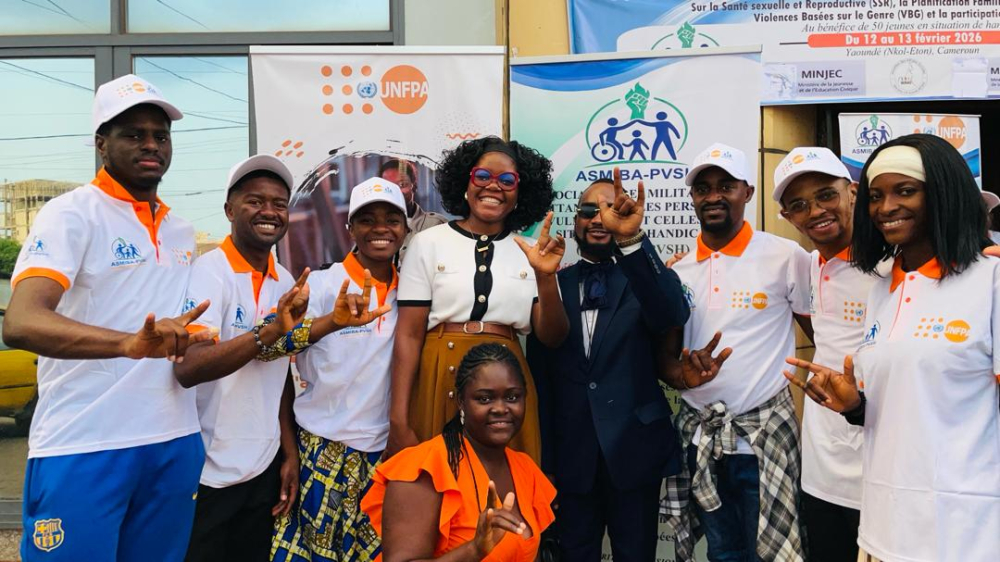
The Association of Advocates and Fighters for Vulnerable Individuals and People with Disabilities, ASMIBA-PVSH, ended its first workshop in Yaounde on February 13, 2-26. Funded by UNFPA.
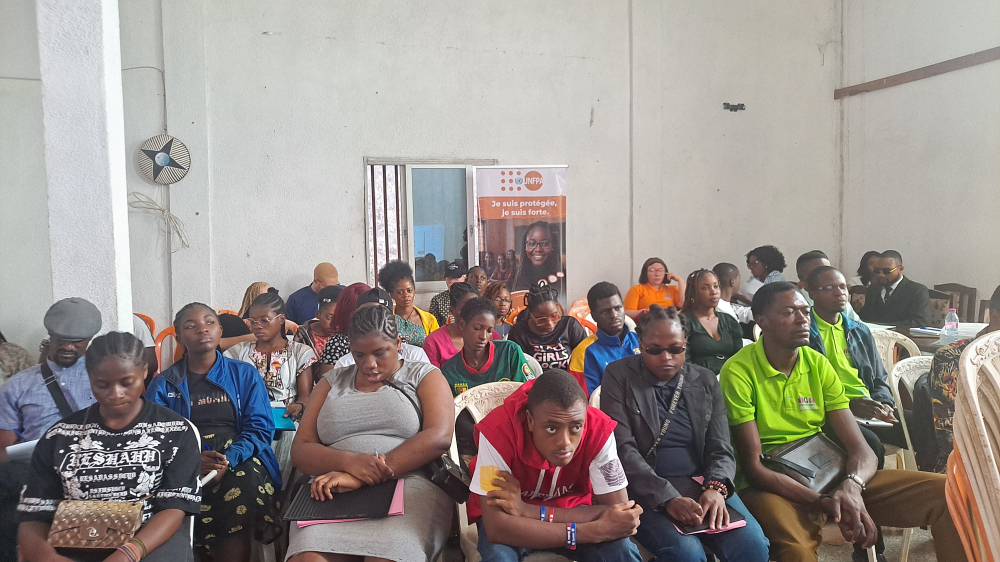
The air of Yaounde hung heavy with expectation in the morning of February 13, 2026, but inside a conference hall in Nkoleton, the atmosphere was electric. Some 50 young people from the Centre, East, and West regions of Cameroon had gathered, not just to listen, but to be transformed. For many, this was the first time they had been addressed not as objects of charity, but as agents of change - sexual beings with rights, and citizens with political power.
Ending Systematic Exclusion
The occasion was a landmark workshop on “Sexual and Reproductive Health, Family Planning, Gender-Based Violence Prevention, and Youth Participation.” It was organized by the Association of Advocates and Fighters for Vulnerable Individuals and People with Disabilities, ASMIBA-PVSH, in a groundbreaking partnership with the United Nations Population Fund, UNFPA.
For Olivier Tombi a Sanam, the President of ASMIBA-PVSH, the event marked a significant milestone. "Yes, it was the first time," Olivier admitted, a note of pride in his voice. "ASMIBA-PVSH is a very young association, created only in 2024. We have this partnership, this funding from the United Nations Population Fund. It's big. It allows us to work, it allows us to grow as an association."
But the significance of the two-day training went far beyond the organizational growth of a nascent NGO. It struck at the heart of a silent crisis in Cameroon: the systematic exclusion of young people with disabilities from the conversations that affect their bodies and their ballots.
The Void Of Knowledge
The workshop began by addressing a topic often shrouded in secrecy and taboo: sexual and reproductive health. For young people with disabilities, this silence is often deafening. "The lesson learnt from our first training is that... as it is written in the Holy Scriptures... My people perish for want of knowledge," Olivier said, quoting the ancient proverb to frame the modern urgency of the workshop.
Before this training, the understanding many of the participants had regarding their own health was, in Olivier’s words, "mere shallow understanding." They knew the basics, perhaps, but lacked the depth required to navigate a world where they are disproportionately vulnerable to exploitation and disease.
Equipped For The Future
The workshop changed that. "Young peer educators were equipped during the training and are determined to go on the field," Olivier explained. "They now know how to preserve themselves. How to avoid diseases in a more in-depth way."
The facilitators did not shy away from the difficult topics. Professionals were brought in to dissect the complexities of gender-based violence, family planning, and the prevention of HIV and STDs. Crucially, they created a safe space where participants could voice concerns that had never been validated before. "They had the opportunity to hear from professionals who had time to answer all their questions, all their concerns," Olivier noted.
Very Different Workshop
Among the 50 participants was Amaya Machi Rossignol, a 21-year-old high school student with a visual impairment. Her journey to the workshop was born of skepticism. "When I heard about the training, I wondered what else it could bring me," Amaya confessed. "Because when we talk about sexuality, violence, and gender, I thought, ah, these are frequent topics, and for me, there was no particularity to them."
She expected the usual rehearsed platitudes. Instead, she found a rigorous education that dismantled her assumptions. "I was greatly surprised to see how much I learnt," she said. "First of all, honestly, I didn't know there was a difference between sex and gender."
The revelation was profound. In a society where disability often renders a person invisible or desexualized, understanding the nuances of gender and sexuality was an act of reclamation. "The topics were well chosen. There were simple topics, but the facilitators dug deep," Amaya observed.
Shivers Of Inspiration
The intellectual rigor of the modules was matched by the emotional resonance of the testimonials shared among peers. The power of the workshop lay not just in the curriculum, but in the shared experiences of the participants.
Amaya spoke of a specific moment that left an indelible mark on her psyche. It was a testimony delivered by a woman named Marie-Louise. "I can't name all the testimonies, but the one that really touched was Marie-Louise's," Amaya recalled.
The interaction between the two women highlighted the invisible barriers that often separate even those within the disability community. "The day before when she approached me, I didn't realize at the moment that she had a problem," Amaya recounted. "Because when she asked me a question, I answered. But when she asked me a second question, even though I was discreet, I didn't say anything. I told my neighbor to come and help me."
Can Now Communicate
Amaya had assumed Marie-Louise could not communicate. The following day, however, Marie-Louise stood before the room and shattered that perception. "She told me that she couldn't imagine that one day she would be able to speak," Amaya said, her voice trembling with the memory. "But what surprised me was the fact that Marie-Louise told me that she was also an international athlete and that she had a job in one government ministry."
It was a narrative of triumph over profound adversity. Marie-Louise, who had struggled with speech and hearing, was now a professional athlete and a civil servant. "It gave me... shivers," Amaya said. "Honestly, it gave me shivers."
Changed Perspective
But the inspiration did not only come from the peers. It came from the leadership. Olivier Tombi a Sanam, the man at the helm of ASMIBA-PVSH, delivered a presentation on the second day that fundamentally shifted Amaya’s perspective.
"Even on the first day of workshop when I arrived, I couldn't imagine that it was the same person I had to meet, or that I knew a few years ago," Amaya said. "But through his presentation, it really boosted me."
Olivier is not just an association president; he is a living testament to the potential of the community he serves. He is currently finalizing a PhD in Political Science, specifically in International Relations, under the supervision of the renowned Prof. Mathias Owona Nguini. "I expect to defend the PhD in the coming weeks," Olivier mentioned, almost casually, as if balancing a doctorate and a national advocacy campaign was standard procedure.
The Political Awakening
While the health modules provided the tools for survival, the political sessions provided the roadmap for dignity. Olivier, who serves as the President of the Youth Wing of the Cameroon People’s Democratic Movement, CPDM for Kiki South in the Mbam and Inoubou Division of Centre Region, pivoted the conversation from the body to the ballot box.
"Young people are often reluctant to participate fully in political processes," Olivier noted. This reluctance is compounded by disability, where physical accessibility and societal stigma create formidable walls to entry.
During the workshop, Olivier took the participants through the legislative frameworks that guarantee their rights. He dissected the Constitution of Cameroon, which sets the voting age at 20 for all citizens, and the Electoral Code, which outlines the eligibility conditions for mayors, deputy mayors, and members of Regional and Municipal Councils.
Eligibility Conditions
"We saw the eligibility conditions. We saw the documents to be provided. It is not very complicated," Olivier asserted. "There is no exclusion about that."
The legal barriers, he argued, are largely non-existent. The real battle is psychological and sociological. "The real problem is young people themselves," Olivier told the group. "We have to be more dynamic. We have to work. We have to stand out. Because for us to be seen, we have to work three times more than others."
It was a message of tough love. Olivier refused to let the participants define themselves by their limitations. He shared his own trajectory - from a Youth Senator to a key player in local politics - to illustrate wha...
Cet article complet est réservé aux abonnés
Déjà abonné ? Identifiez-vous >
Accédez en illimité à Cameroon Tribune Digital à partir de 26250 FCFA
Je M'abonne1 minute suffit pour vous abonner à Cameroon Tribune Digital !
- Votre numéro spécial cameroon-tribune en version numérique
- Des encarts
- Des appels d'offres exclusives
- D'avant-première (accès 24h avant la publication)
- Des éditions consultables sur tous supports (smartphone, tablettes, PC)




Commentaires