

Non-Communicable Diseases: PM’s Office Backs Radical Shift In Nutrition Policy
- Par Kimeng Hilton
- 10 Apr 2026 14:31
- 0 Likes
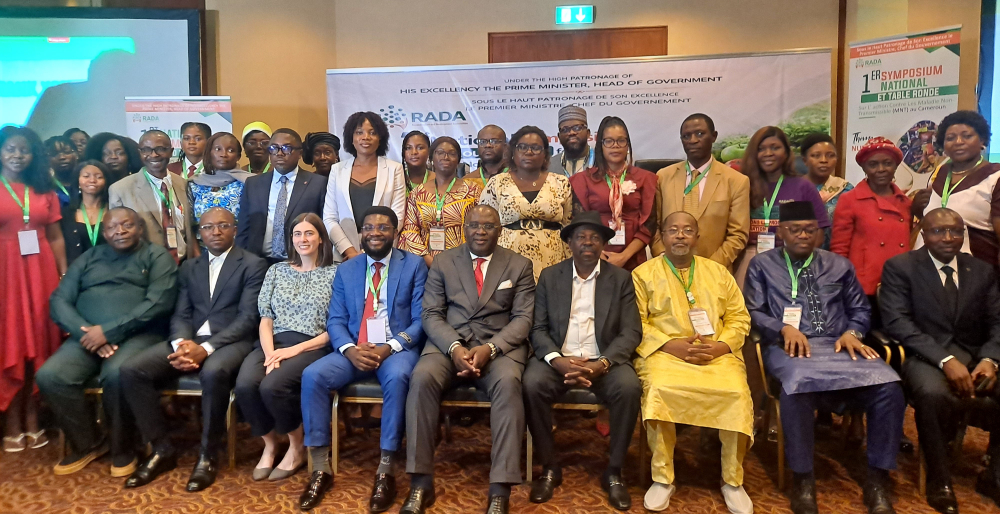
The two-day first National Symposium and Roundtable on NCDs, concluded in the Cameroonian capital, Yaounde on April 9, 2026. With stakeholders making recommendations.
Under the high-level patronage of the Prime Minister and Head of Government, Chief Dr. Joseph Dion Ngute, Cameroon has officially declared war on the "silent killers" of the modern age. On April 9, 2026, the first-ever National Symposium and Roundtable for Action on Non-Communicable Diseases (NCDs) concluded in Yaounde, signaling a tectonic shift in how the nation views the link between the dinner plate and the hospital ward.
Recommendations
Chenwi Claris Chenui, the Programme Manager for the Healthy Feeding Cameroon Programme at the Reconciliation and Development Association, RADA, the organizers of the symposium. “Some of the major recommendations from the gathering were that we need to work closely with key ministries, including the Ministry of Public Health, the Ministry of Mines, Industry and Technological Development, Ministry of Trade, and the Ministry of Finance. We need to keep pushing to ensure that they attend such meetings, and it was also recommended that the symposium should not be the last. This is the first, like we mentioned, so there will definitely be other versions of this symposium,” Chenwi stated.
Of Advocacy
“We're working with these ministries for policy advocacy. Anything related to policy, you must work with the government. So we're talking about fiscal policies that promote public health, we're talking of front-of-package warning label and marketing restrictions policy. We're also looking at the taxation of unhealthy packaged food products. For us to be able to advocate for these policies, the place of ministries such as Ministry of Public Health, Ministry of Finance, cannot be ignored. So these ministries must be involved in this process,” Chenwi explained.
Government Takes The Lead
The event reached its climax with a powerful endorsement from the highest levels of the state. Dr. Gustave Iyong, the Focal Point for Health and Nutrition in the Prime Minister’s office, stood as the representative of the Head of Government to close the proceedings. His message was clear: the era of passive observation is over.
"We are now in partnership," Dr. Iyong declared, addressing the Reconciliation and Development Association (RADA), the primary organizer of the event. "You can count on the government to support your work." Dr. Iyong urged stakeholders to move with speed, demanding that the symposium’s resolutions be finalized for immediate submission to the Ministry of Public Health. Which will then forward them to the Prime Minister’s office for executive action. The government’s involvement marks a critical transition from civil society advocacy to State-led policy.
Priority For International Partners
Nicole Ide, Senior Technical Advisor for the Nutrition Programme at Resolve To Save Lives (USA), the organization that financed the gathering, explained why this project was a priority for international partners. "This is a really important topic for us and one that's been neglected for far too long," she said. Ide emphasized that the commercialization of unhealthy, ultra-processed foods is eroding the traditional healthy diets that once kept Cameroonians resilient.
Ide’s message was not just about health, but about the "life of a policy." She noted that passing a law is only the first step. "A policy doesn't live on paper; it needs implementation, monitoring, and enforcement."
Startling Statistics
For two days, participants discussed with a sense of urgency. The data presented was stark: NCDs - including cardiovascular diseases, diabetes, and various cancers - now account for a staggering 43% of all annual deaths in Cameroon. What was once considered a problem for wealthy, Western nations has arrived at Cameroon’s doorstep with a vengeance. Driven by a rapid transition from traditional diets to a reliance on ultra-processed, high-sodium, and sugar-laden commercial foods.
The Economic, Biological Cost
The symposium highlighted a disturbing trend that has been simmering for decades. According to research presented during the sessions, the prevalence of overweight children under five has more than doubled, jumping from 5% in 1991 to 11% in 2018. In urban centers, nearly 13% of school-aged children are now overweight, with girls being disproportionately affected.
The "WHO Best Buys"
The symposium focused on what global h...
Cet article complet est réservé aux abonnés
Déjà abonné ? Identifiez-vous >
Accédez en illimité à Cameroon Tribune Digital à partir de 26250 FCFA
Je M'abonne1 minute suffit pour vous abonner à Cameroon Tribune Digital !

- Votre numéro spécial cameroon-tribune en version numérique
- Des encarts
- Des appels d'offres exclusives
- D'avant-première (accès 24h avant la publication)
- Des éditions consultables sur tous supports (smartphone, tablettes, PC)


Reactions
De la meme catégorie

Affaire Martinez Zogo: Le 36e témoin entre en scène
- 27 Oct 2026 10:04
- 0 likes
Cameroon Medical Council: Newly Elected Pledges to Restore Dignity
- 27 Oct 2026 10:03
- 0 likes





Commentaires