

Contraband Phones, Digital Devices: 700,000 Risk Blocking On April 30, 2026 By MINFI
- Par Kimeng Hilton
- 28 Apr 2026 12:17
- 0 Likes
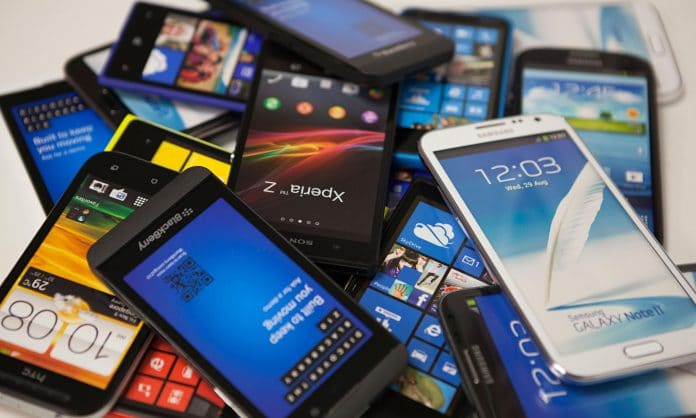
The Minister of Finance, Louis Paul Motaze on April 27, 2026 announced the measure in compliance with the 2023 Finance Act introducing the electronic payment of customs duties and taxes on imported phones, tablets and digital terminals.
On April 27, 2026, the Minister of Finance, Louis Paul Motaze, signed a statement marking a seismic shift in the economic fabric of Cameroon. Communiqué (No. 0000452/MINFI/CAB) was not merely an administrative update; it was a manifesto for a modern, digitally-fortified state. The announcement confirmed that the "electronic collection of customs duties and taxes on the importation of telephones, tablets, and digital terminals" had officially entered its enforcement phase.
700,000 Contraband New Devices
The numbers were staggering: 700,000 new devices - connected to the local network in less than four weeks - had bypassed the national treasury. As the April 30, 2026 deadline for "regularization without fine" looms, Cameroon finds itself at the forefront of a global conversation regarding fiscal sovereignty, the informal economy, and the role of technology in governance.
Article Six Of 2023 Finance Act
To understand the urgency of April 30, 2026 deadline given by the Minister for defaulting mobile phone importers to pay their duties, one must revisit the legislative foundations laid three years prior. The Finance Act for the 2023 financial year was a landmark document that sought to bridge the gap between traditional tax collection and the rapidly evolving digital landscape.
For decades, the "grey market" for mobile devices in Cameroon was an open secret. Thousands of handsets crossed the borders from neighboring countries every day - hidden in suitcases, tucked under truck seats, or carried by "mules" through unofficial footpaths. While these devices provided the Cameroonian public with affordable access to the internet, they represented a massive, hemorrhaging wound in the national budget.
Article Six changed the rules of the game. It pivoted the responsibility of tax compliance from the physical border to the digital network. By mandating a mechanism where the telecommunications infrastructure itself acts as a customs officer, the law ensured that no device could enjoy the benefits of the Cameroonian network without first contributing to the Cameroonian State.
The Electronic Collection Mechanism
How does one "catch" a smuggled phone that is already in a consumer’s hand? The answer lies in the International Mobile Equipment Identity (IMEI). Every digital terminal - be it a high-end smartphone or a basic tablet - possesses a unique IMEI. The new mechanism implemented by the Ministry of Finance (MINFI) functions as a sophisticated bridge between the Customs Department’s database and the servers of the nation’s telecommunications operators (MTN, Orange, Camtel, and Nexttel).
The "Handshake" Protocol
When a user inserts a local SIM card into a newly imported device, the device attempts to "handshake" with the local cell tower. The network operator instantly queries the MINFI database to see if that specific IMEI has been cleared through customs. If the duty has been paid at the point of entry (by a formal importer), the device is white-listed. If the device has no record of payment, it is flagged.
As the April 27, 2026 communiqué revealed, the system flagged 700,000 such devices from April 1-25, 2026. This volume of data provides the government with an unprecedented "X-ray" of the shadow economy, revealing exactly how much revenue is being bypassed in real-time.
The Fiscal Alarm
The figure of 700,000 devices in 25 days is more than just a statistic; it is a fiscal alarm bell. If we break down the potential revenue loss, the necessity of Minister Motaze’s reform becomes clear. In Cameroon, the cumulative taxes on imported phones (including customs duties, VAT, and other levies) generally range between 25% and 33% of the device's value.
If 400,000 of these phones are valued at an average of 40,000 FCFA, the tax per unit is roughly 13,000 FCFA. And if the remaining 300,000 are valued at 150,000 FCFA, the tax per unit is nearly 50,000 FCFA.
A conservative estimate suggests that in just 25 days, the State was deprived of over 20 billion FCFA ($33 million USD). Projected over a year, the "leaking" revenue from smuggled digital terminals could fund entire regional hospital networks or hundreds of kilometers of paved roads. By capturing this revenue, the Ministry of Finance is not just collecting taxes; it is reclaiming the nation’s ability to self-fund its development.
The "Soft Power" Of Awareness
One of the most notable aspects of the April 27, 2026 communiqué is the Minister’s decision to delay the "systematic blocking" of devices. This is a masterful display of governance with a human face.
The Minister acknowledges that many consumers are victims of "asymmetric information." A student in Yaounde or a trader in Douala may buy a phone from a reputable-looking shop, assuming all duties have been paid. To block that phone instantly on April 1. 2026 would have caused mass confusion and potential social backlash.
Instead, the period from April 1-30, 2026 has been utilized as an awareness-raising window. The system allowed the phones to work while likely sending automated SMS alerts to users, informing them of their irregular status. This "grace period" serves two purposes: It gives the honest consumer a chance to hold their vendor accountable or to pay the duty themselves. And it allows the payment platforms to scale up before the hard cutoff.
However, the communiqué is firm: the time for awareness is ending. After April 30, 2026, "smuggling" will no longer be tolerated. The "blocking" of terminals is a digital guillotine that will render illegal devices useless for communication within the national borders.
"Tax Citizenship"
Minister Motaze’s appeal for "tax citizenship" is perhaps the most philosophically significant part of the document. In many developing economies, there is a disconnect between the citizen and the State’s coffers. Tax is often seen as a burden rather than a contribution to the collective good.
By framing this reform as an act of "citizenship," the Ministry of Finance is attempting to rewrite the social contract. The communiqué calls on the "entire national community" to participate. This implies that: Importers must stop cutting corners and embrace formal trade. Retailers must provide proof of customs clearance to their customers. And consumers must demand that their devices are "legal" before handing over their money.
Tax citizenship, in this context, is the recognition that a smartphone is not just a tool for social media or business; it is a node in a national infrastructure that requires maintenance, security, and funding.
National Security
The communiqué makes a direct link between tax compliance and "national security." This is not hyperbole. In the 21st Century, the digital terminal is the primary tool for both economic progress and security threats.
Smuggled devices are often used by criminal networks or terrorist groups because they lack a clear "paper trail" in the national registry. By forcing all devices through the electronic customs gate, the State gains better oversight of what is operating on its spectrum.
As the Minister "salutes" the compliance of taxpayers, he reminds the public that these funds are what allow the State to maintain peace and order. In a region facing various security pressures, fiscal robustness is the first line of defense.
Similarly, smuggled goods often include counterfeit or substandard electronics that can interfere with network stability or pose safety risks (e.g., exploding batteries). Formal customs clearance ensures a level of quality control that protects the public.
The Economic Ripple Effect
The implementation of the electronic collection mechanism will inevitably restructure the Cameroonian retail market. For years, formal importers who paid their duties were undercut by informal traders who could sell the same device for 30% less. This reform levels the playing field. Formal businesses that have historically "played by the rules" will see a surge in demand as the "grey market" prices rise to include the necessary taxes.
The regularization process requires a seamless way for citizens to pay their duties. This will likely drive the adoption of Mobile Money and e-government payment portals, further integrating the population into the formal financial system.
Critics argue that the cost of digital access will rise. If a 100,000 FCFA phone now costs 130,000 FCFA due to tax enforcement, does this hinder the "Digital Cameroon 2035" vision? The government’s counter-argument is that the long-term benefits of a funded treasury - which can then invest in cheaper broadband and digital literacy - outweigh the short-term price hike on hardware.
Challenges, Hurdles In The Horizon
Despite the technical elegance of the system, the road ahead is fraught with challenges. Come May 1, 2026, if thousands of phones are blocked, the Ministry will face a Public Relations challenge. Dealing with thousands of frustrated citizens at customs offices will require a robust administrative response.
As with any digital lock, there will be attempts to pick it. "IMEI Repair" shops - unauthorized technicians who change the digital ID of a phone to one that is already cleared - will likely emerge. The government will need to stay one step ahead with software updates and legal penalties for such "digital tampering."
Finally, how does the system handle "used" phones brought in by relatives from abroad? The communiqué mentions "new telephones," but the 2023 Finance Act is broad. Clearer guidelines for personal gifts versus commercial smuggling will be essential to maintain public trust.
Architecture For Modernization
Déjà abonné ?
Identifiez-vous >
Cet article complet est réservé aux abonnés
Accédez en illimité à Cameroon Tribune Digital à partir de 26250 FCFA
Je M'abonne
1 minute suffit pour vous abonner à Cameroon Tribune Digital !



Reactions
De la meme catégorie



En kiosque





Commentaires