

Central Africa On High Alert: CEMAC, Cameroon Mobilize Against Resurgent Ebola Strain
- Par Kimeng Hilton
- 23 May 2026 09:58
- 0 Likes
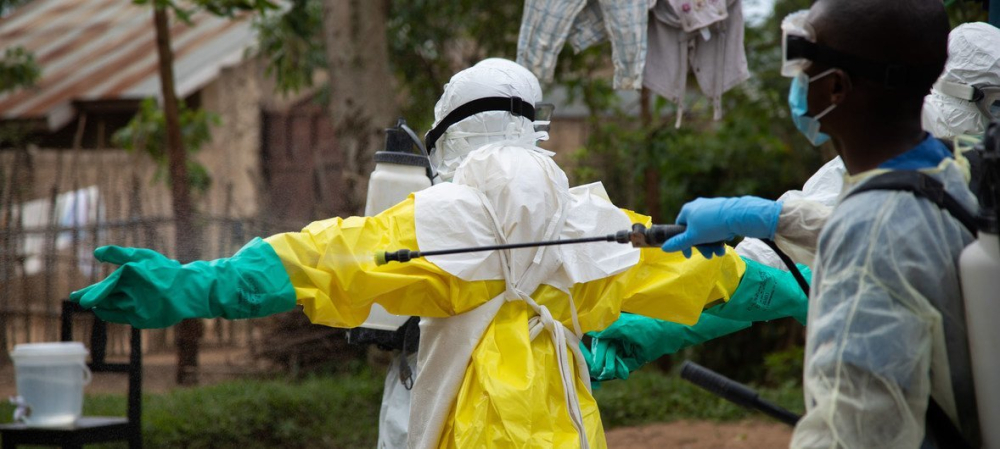
Authorities in the sub-region have put in place safe-handling and hygiene measures following outbreaks in the Democratic Republic of Congo, DRC and Uganda.
Regional authorities across Central Africa have triggered emergency defense protocols following the official declaration of a resurgent Ebola Virus Disease outbreak in the Democratic Republic of the Congo, DRC and Uganda. The outbreak, which has already claimed scores of lives in the DRC’s Ituri Province, has been designated a Public Health Emergency of International Concern, PHEIC, by the World Health Organization, WHO and a Continental Security Emergency by the Africa CDC.
Rare Ebola Strain
What is significantly raising alarms for regional epidemiologists is the specific variant identified. Unlike the more common Zaire strain, this outbreak involves the Bundibugyo virus, a rarer strain for which there is currently no approved vaccine or specific therapeutic treatment. With a lethality rate shifting between 30% and 50%, the threat of cross-border transmission has forced neighboring nations into a race against time.
CEMAC Directs "Emergency Measures"
In Bangui, Central African Republic, CAR, the President of the Economic and Monetary Community of Central Africa, CEMAC Commission, Baltasar Engonga Edjo'o, on May 20, 2026 issued a stern directive to all member states - Cameroon, CAR, Chad, Congo Brazzaville, Equatorial Guinea, and Gabon.
Citing the high population mobility and fluid borders shared with the DRC, Engonga Edjo'o warned of a "high risk of regional spread." The Commission has fully activated its specialized "One Health" institutions and has mobilized the West and Central Africa Health Security Programme, HeSP-3 to provide immediate financial and technical buffer support to frontline member states.
Cameroon Triggers Emergency Readiness
Responding immediately to the sub-regional directive, Cameroon’s Minister of Public Health, Dr. Manaouda Malachie, on May 22, 2026 released a press statement. While assuring the public that no case of Ebola has yet been recorded within Cameroon's territory, the Minister emphasized that the virus's high fatality rate requires absolute vigilance.
"The health emergency classification and the risks associated with international travel require urgent preparation for the possible importation of this epidemic," Dr. Manaouda stated. The Ministry has formally activated the Public Health Emergency Operations Coordination Center and ordered strict, immediate measures across the national territory, including intensified epidemiological surveillance for viral hemorrhagic fevers at all airports, seaports, and land checkpoints.
Mandating hospitals and clinics to map out dedicated isolation spaces and reinforce strict infection control protocols. Deploying community communication networks to educate the public on early symptoms - such as sudden high fever, extreme fatigue, muscle pain, and severe hemorrhagic signs like bleeding gums or blood in vomit.
"One Health" Approach To Prevention
Public health officials are strongly leaning into the "One Health" strategy - collaborating across environmental, veterinary, and human health sectors. Because Ebola is a zoonotic disease primarily tracking from fruit bats, primates, and wild mammals to humans, the public is being urged to completely avoid the handling or consumption of sick or dead animals.
Preventive Measures
The Ministry of Public Health has also discouraged direct contact with the bodily fluids of anyone exhibiting symptoms. And has requested that families immediately report any suspicious health anomalies to the national toll-free emergency number, 1510.
As the ...
Cet article complet est réservé aux abonnés
Déjà abonné ? Identifiez-vous >
Accédez en illimité à Cameroon Tribune Digital à partir de 26250 FCFA
Je M'abonne1 minute suffit pour vous abonner à Cameroon Tribune Digital !

- Votre numéro spécial cameroon-tribune en version numérique
- Des encarts
- Des appels d'offres exclusives
- D'avant-première (accès 24h avant la publication)
- Des éditions consultables sur tous supports (smartphone, tablettes, PC)









Commentaires