
The New Resource War: How Local Elite Outpace Foreigners In Land Grabs
- Par Kimeng Hilton
- 30 Mar 2026 23:02
- 0 Likes
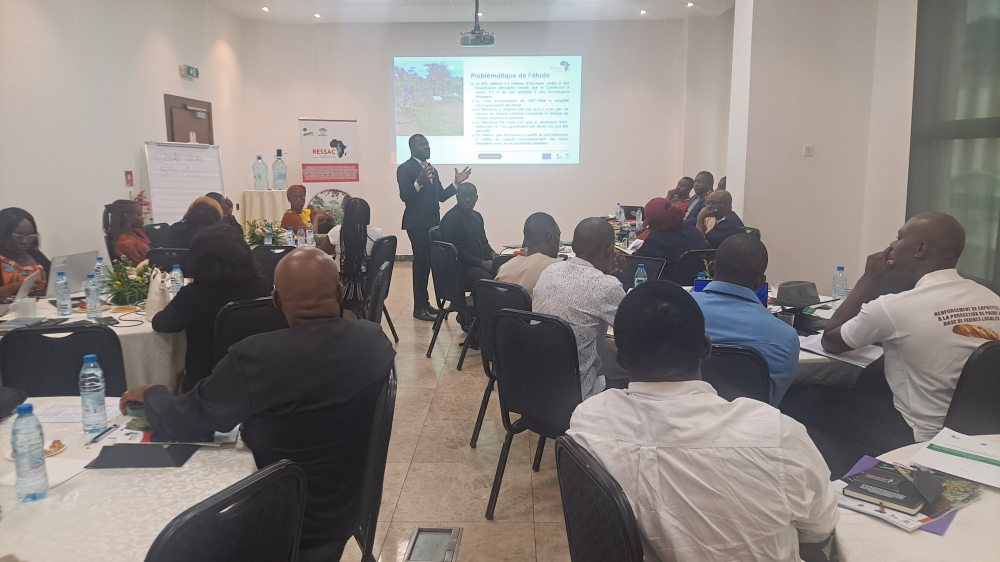
The findings of a two-year study in the Congo Basin published in Yaounde on March 30, 2026 show that Africa now accounts for 50% of global land loss.
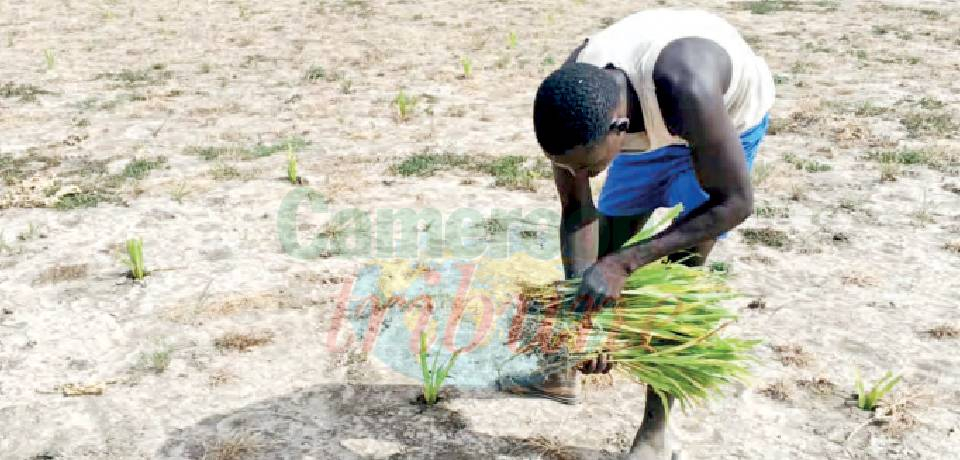
In a startling revelation that places Central Africa at the center of a global resource crisis, a new study reveals that Cameroon has become the most affected country in the world for land grabbing relative to its size. Research presented Monday March 30, 2026 in Yaounde at the closing workshop of the Applied Research in Ecology and Social Sciences (RESSAC) project, shows that 8.5% of Cameroon's total territory has been sold or leased to foreign investors. Experts warn this figure is exacerbated by an even more insidious threat: domestic elite.
Up For Grabs!
Speakers at the workshop included Aristide Chacgom (GDA), Dr. Richard Sufo (CIFOR), Dr. Samuel Assembe-Mvondo (CIFOR), Dr. Salomon Essaga Eteme, and Alain Mfoulou (GDA/University of Dschang). The workshop, titled "Political Economy of Forest Land Grabbing and Conversion by Elites in the Congo Basin," brought together researchers from CIFOR-ICRAF, Green Development Advocates (GDA), and the University of Yaounde I.
Collusion With “Internal Devils”
The findings highlight a dramatic shift in how land dispossession is understood in the region. While international multinationals have long been viewed as the primary "devils" in land accumulation, researchers are now pointing to a growing network of local and international elites who are "causing harm not only to communities, but also to the land and forest resources".
"Generally, when people talk about grabbing, they look at what's happening with foreigners," explained one project lead during a press briefing. "We don't know that here, inside our countries, there are probably bigger devils... dispossessing vulnerable populations of their customary lands".
A Continent Under Pressure
The gravity of the situation extends across the continent. By 2024, Africa was identified as the continent most affected by land grabbing globally, accounting for over 50% of all such transactions. While the Democratic Republic of Congo leads in total area with 9.6 million hectares ceded, the intensity of the phenomenon in Cameroon represents a unique existential threat to the nation’s forest governance.
Three Countries Involved
The RESSAC project, funded by the European Union to the tune of 169,000 Euros, conducted parallel case studies in Cameroon, Gabon, and Congo over the last two years. The research found that while the phenomenon is "very intensive" in Cameroon and "moderate" in Congo, it remains "weak" in Gabon, primarily due to a legal framework where all land belongs to the State, making private grabbing more difficult to categorize.
Human, Environmental Cost
Land grabbing is defined by the researchers as the large-scale occupation of valuable land by actors with substantial financial or material resources. It occurs in a vacuum of power where local communities lack the cognitive, political, or economic resources to defend themselves. The consequences described in the study are dual-edged: ...
Cet article complet est réservé aux abonnés
Déjà abonné ? Identifiez-vous >
Accédez en illimité à Cameroon Tribune Digital à partir de 26250 FCFA
Je M'abonne1 minute suffit pour vous abonner à Cameroon Tribune Digital !
- Votre numéro spécial cameroon-tribune en version numérique
- Des encarts
- Des appels d'offres exclusives
- D'avant-première (accès 24h avant la publication)
- Des éditions consultables sur tous supports (smartphone, tablettes, PC)





Commentaires