

Genetic Selection In The Tropics: How Dr. David Akuro Mbah Proved The Doubters Wrong
- Par Kimeng Hilton
- 29 Apr 2026 13:35
- 0 Likes
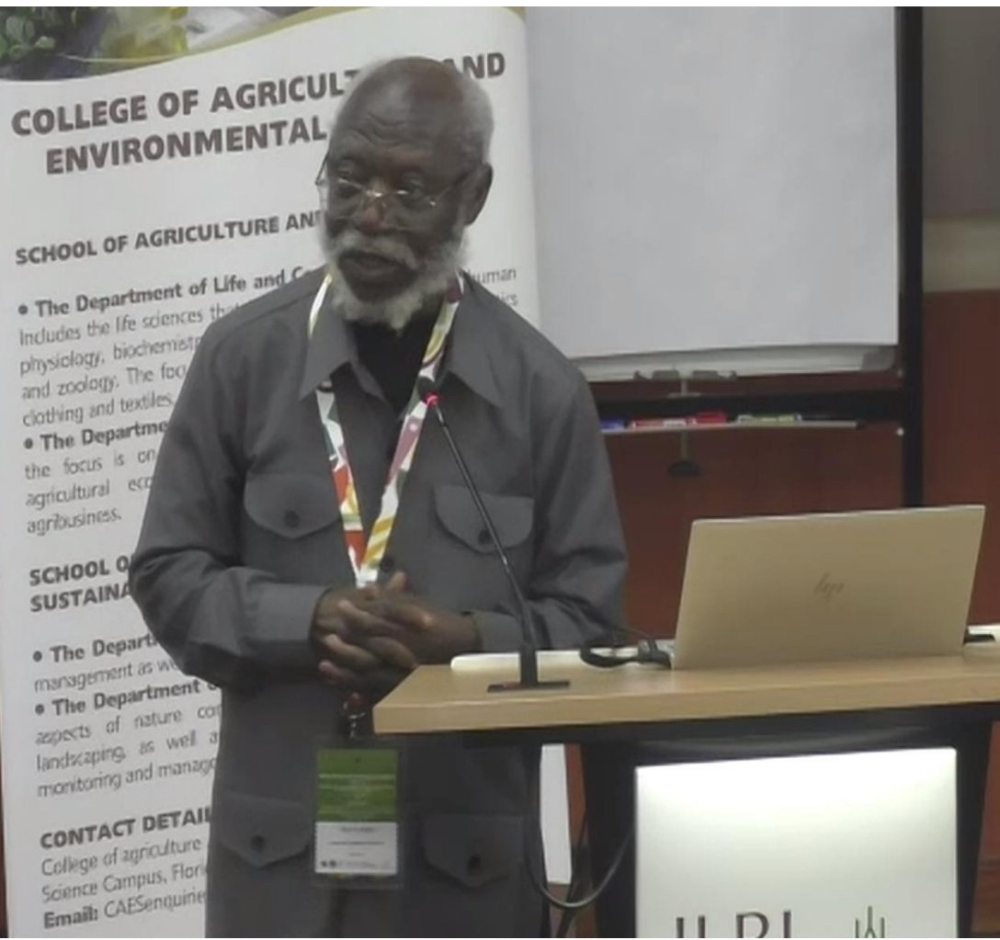
The contributions of the 82-year-old retired researcher to livestock development were earlier this year acknowledged by the African Animal Breeding Network, AABNet. With the award of the AABNet Iconic Award.
In the morning of February 20, 2026, the atmosphere in the grand hall of the International Livestock Research Institute, ILRI, Nairobi, Kenya, was electric. The African Animal Breeding Network (AABNet) had gathered the continent’s most brilliant minds for a singular purpose: to recognize a titan. When Cameroonian-born researcher, Dr. David Akuro Mbah stepped onto the podium to receive the 2026 AABNet Iconic Award, it was not just a personal victory. It was a validation of six decades of Cameroonian scientific excellence. Marking his entry into Africa’s Livestock Research Hall of Fame.
Living Bridge
At 82 years old, Dr. Mbah - widely known as "Pa Mbah" or "Daddy Mbah" - stands as a living bridge between the foundational agricultural efforts of the post-colonial era and the sophisticated genomic era of the 21st Century. In an exclusive interview with Cameroon Tribune Online following the ceremony, Dr. Mbah remained characteristically humble.
First Of Its Kind
"Receiving the award, the first of its kind by the African Animal Breeding Network of Peers, gave me the impression that what I thought was a small contribution was relatively important in the discipline in Cameroon and Africa," Mbah noted. "It was proof of the principle in the tropics".
This "proof of principle" is the common thread that binds his vast body of work. For decades, international skeptics doubted whether high-level genetic selection could truly function in the harsh, disease-prone climates of the tropics. Dr. Mbah did not argue with them; he simply went to work.
From Ashong To The Global Stage
To understand the scientist, one must understand the man’s roots. Dr. Mbah was born in 1943 in Ashong, Momo Division of the North West Region of Cameroon. Growing up in a region where livestock is central to the economy and culture, he developed an early affinity for the natural sciences.
His educational trajectory was a steady climb toward specialization: From 1958–1962, he attended the prestigious Cameroon Protestant College (CPC), Bali in Mezam Division of the North West Region, where he earned his West African School Certificate. Before diving into research, he shared his knowledge, teaching Biology, Chemistry, and Mathematics at CPC Bali from 1968 to 1971.
Liberia, Then The US
His thirst for deeper knowledge took him to Cuttington University, Liberia for his B.Sc. in Biology (Zoology), followed by a move to the United States. He earned his M.S.A. in Animal Science (Breeding and Genetics) from the University of Florida in 1975 and finally his PhD in Genetics from Pennsylvania State University in 1980.
Equipped with a PhD from one of the world's leading research institutions, Dr. Mbah made a choice that would define his legacy: he returned to Cameroon. He didn't just bring back degrees; he brought back a vision for a food-secure Africa.
Beef, Dairy, "Wakwa" Breed
Upon his return, Dr. Mbah took over leadership roles at the Institute of Animal and Veterinary Research (IRZV). His research career was built on three categories of intervention: Strategy, Choice of Breed, and Action. His most famous contribution is the completion of work on the Wakwa synthetic beef breed. This was earlier started in the 1960s by the French Technical Cooperation and some data already collected. Dr Mbah's team completed the research by carrying out analyses and doing the genetic selection.
By crossing the Brahman (known for heat tolerance and hardiness) with the local Gudali (known for its meat quality and adaptation), the result was a 50/50 crossbreed that could thrive in Cameroon's unique environment while providing superior beef yields.
The Dairy Revolution
In the dairy sector, the results were even more dramatic. Dr. Mbah spearheaded the cross-breeding of European dairy giants like the Holstein and Montbéliarde with local cattle. The goal was a "E5/8 L3/8" genetic combination - a cow that could survive the tropical sun, but produce three to four times more milk than the local cow.
The impact was immediate. These genotypes were adopted by the Tadu Dairy Cooperative Society in Bui Division of the North West Region, transforming the economic outlook for dairy farmers in the region. This wasn't just "science for science's sake"; it was science that put money in the pockets of farmers and milk in the mouths of children.
Shielding Cameroon’s Biodiversity
Dr. Mbah’s influence extended far beyond the cattle pens of Wakwa in Cameroon’s Adamawa Region. He understood that without proper laws, scientific progress could be erratic or even dangerous. From 1993 to 1998, he served as the Director of Valorisation and Development Support in the Ministry of Scientific and Technical Research (MINREST).
His most critical policy work occurred between 1997 and 2006. During this window, he was a key architect in the National Biodiversity Strategy - drafting the roadmap for how Cameroon protects its biological wealth. Modern biotechnology regulation - crafting laws that govern how Genetically Modified Organisms, GMOs and other advanced biological technologies are used in the country. And bio-safety - serving as the Scientific Officer for the UNEP-GEF Bio-safety Support Project, ensuring that Cameroon’s environmental safety met international standards.
Retirement, Mentorship, The "Secret"
The most startling fact about Dr. Mbah is that he has been officially retired for 23 years. Yet, his calendar remains fuller than many professionals half his age. When asked why he continues to be so active, his answer was simple: the young generation needs him.
"I think I have no secret beyond giving young scientists the desired response to their quest," he told Cameroon Tribune. "I am still active and more involved with science advice within the objectives of the Cameroon Academy of Sciences and the mentoring of young scientists who continue to indicate the need".
Since 2016, he has also served as the Rector of Jomatt Polytechnic Institute of Higher Education, proving that his leadership skills are as sharp as his genetic formulas.
A Man Of Two Worlds
The tributes to Dr. Mbah reflect a man who is equally comfortable in a high-tech lab and a traditional village council. From the scientific community. peer researchers describe him as a visionary who proved that "Action is possible in the tropics." His record of 55 peer-reviewed articles, 4 book chapters, and 77 conference papers provides the "text" for his career - a roadmap for future African geneticists.
From his native Ashong, he is not just a PhD holder; he is a man of honour. The Fon of Ashong awarded him the Red Feather (Eyuri), an accolade reserved for those who bring significant progress and pride to the village. To his neighbours, he is "Pa Mbah," the man who used his international education to lift his people.
A Living Legacy
As of February 2026, Dr. David Akuro Mbah has added another milestone: co-authoring the definitive book African Livestock Genetic Resources and Sustainable Breeding Strategies. This book launch, coinciding with his AABNet Iconic Award, ensures that his six decades of data and experience are preserved for the next century of African scientists.
When asked about his health and longevity, the 82-year-old pioneer remains humble. "Thanks to God, my health is still acceptable," he says. But for the continent of Africa, the "secret" to his success is clear: a life dedic...
Cet article complet est réservé aux abonnés
Déjà abonné ? Identifiez-vous >
Accédez en illimité à Cameroon Tribune Digital à partir de 26250 FCFA
Je M'abonne1 minute suffit pour vous abonner à Cameroon Tribune Digital !

- Votre numéro spécial cameroon-tribune en version numérique
- Des encarts
- Des appels d'offres exclusives
- D'avant-première (accès 24h avant la publication)
- Des éditions consultables sur tous supports (smartphone, tablettes, PC)


Reactions
De la meme catégorie

Affaire Martinez Zogo: Le 36e témoin entre en scène
- 27 Oct 2026 10:04
- 0 likes
Cameroon Medical Council: Newly Elected Pledges to Restore Dignity
- 27 Oct 2026 10:03
- 0 likes





Commentaires