

Beyond The Ivory Tower: How African Academia Is Reclaiming Child Protection
- Par Kimeng Hilton
- 04 May 2026 20:39
- 0 Likes
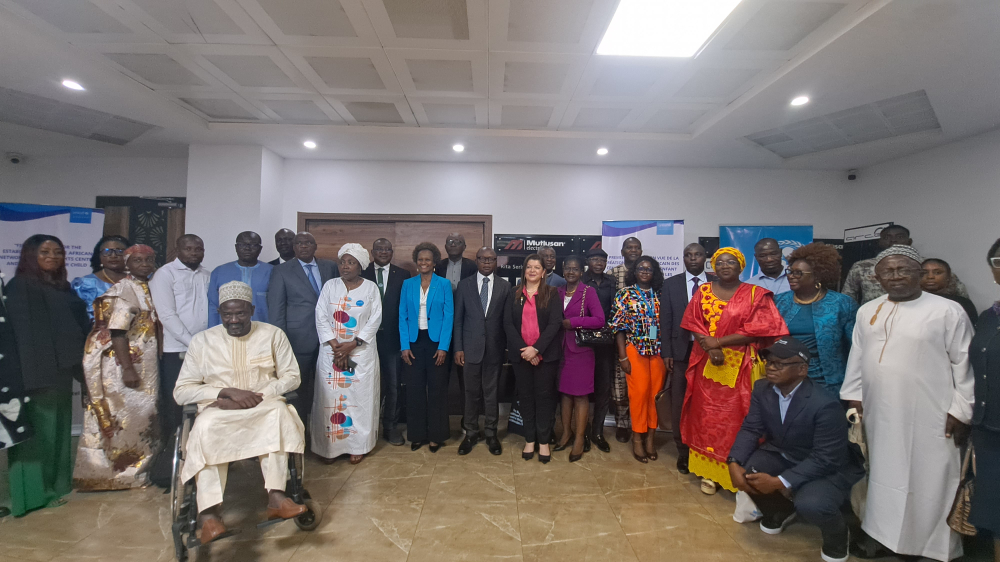
Experts from African universities are meeting in the Cameroonian capital, Yaounde from May 4-5, 2026 to establish the African Network of Universities for Child Rights.
In a historic convergence of ancient African heritage and modern academic rigour, the first official meeting to establish the African Network of Universities for Child Rights convened in the Cameroonian capital, Yaounde on May 4, 2026. This two-day summit, hosted under the strategic leadership of United Nations Children’s Fund, UNICEF Cameroon, marks a definitive shift in how the continent approaches the protection and promotion of its youngest citizens.
By bridging the gap between ivory-tower research and the lived realities of children in conflict zones, nomadic societies, and digital landscapes, the network aims to institutionalize a uniquely African vision of child welfare.
African-rooted Framework
The inaugural lecture, delivered by Prof. Ibrahim Ndiaye of Mali, set a profound tone for the gathering. Prof. Ndiaye did not merely speak of policy; he spoke of "imposed wars" and the "crisis of the soul" facing the Sahel and broader Africa.
“We are reflecting on how to very quickly stabilize this segment of our population,” Ndiaye remarked, referring to the millions of children displaced by conflict and aggression. However, his solution was not found in foreign textbooks, but in the sands of Mali and the scrolls of Ancient Egypt.
Ndiaye reminded the assembly that Mali is a "very old nation" with over 1,500 ancient manuscripts specifically addressing child rights. Since 1237, traditional mechanisms have existed to evaluate the rights of children, women, and the elderly every five years. This "ancient wisdom" suggests that Africa is not a newcomer to human rights, but a pioneer whose heritage has been obscured by centuries of external disruption.
The Paradox Of Modernity
A central theme of the summit was the "Paradox of African Modernity." While the continent possesses a rich cultural DNA where the child is viewed as a "blessing" and the family as the "core of the community," Prof. Ndiaye noted a modern "social disintegration."
“Our societies were broken down by the Slave Trade, colonization, and today, the impact of technology and media,” he warned. The meeting highlighted a startling lack of African-centric digital content.
Today’s African child is more likely to consume media from Asia, Europe, or America than stories rooted in their own soil. Ndiaye’s call to action was clear: Africa must produce its own "mangas," its own digital tales, and its own theater - rooted in cultures like the Bamiléké of Cameroon - to provide a credible alternative to foreign influence.
The Crucible Of Innovation
Nadine Perrault, the UNICEF Representative in Cameroon, outlined the journey that led to this moment. The project began with a localized success story: the installation of Child Rights Centers (CRCs) within nine Cameroonian universities. These centers, spread across all regions of the country, have turned universities into "agents of change."
“When a country invests in its children through academic rigor, it invests in its future,” Perrault stated. The Yaounde model is now being scaled into a continental "web." The mission is to transform academia from a passive observer into an active participant in society’s transformation.
Prof. Alphonse Tonye, representing Cameroon’s Minister of Higher Education, Prof. Jacques Fame Ndongo, reaffirmed the State's commitment. He noted that child protection is a "presidential priority" for President Paul Biya and First Lady Chantal Biya. The government's strategy is interdisciplinary, aiming to weave child rights into the fabric of health, education, and sanitation (WASH) …. initiatives.
Pillars Of The University Network
The network is built upon three strategic objectives designed to move child rights from theoretical debate to practical implementation: Using the prestige and platform of the university to influence government policy and hold leaders accountable. Utilizing the vast research capacity of African universities to generate data that reflects diverse cultural contexts - from nomadic Saharan societies to sedentary equatorial communities.
Moving child rights out of the silo of Law Schools and into every faculty, ensuring that future engineers, doctors, and teachers are grounded in these principles.
Prof. Gahar Sabrina, President of the African Committee of Experts on the Rights and Welfare of the Child, emphasized that this network fills a long-standing "knowledge gap." While the African Charter on the Rights and Welfare of the Child was established in 1990, the implementation has often lacked the evidence-based data that only a robust academic network can provide.
Unique African Contribution
One of the most striking revelations of the summit was the discussion of the African Charter as a unique global instrument. Unlike Western frameworks that often focus exclusively on individual entitlements, the African Charter addresses the "right to responsibility."
This concept emphasizes the child’s duty toward their family, society, and community. It reflects a holistic educational philosophy that Prof. Ndiaye described as addressing "the body, heart, and brain." He critiqued modern systems that focus solely on "brain knowledge" (academic intelligence) without building character or "heart."
In the traditional African view, development is a staged process of monitored growth, leading to full autonomy between the ages of 20 and 25. The network aims to reclaim this holistic approach, ensuring that rights are balanced with the values of community and character.
Digital Frontiers, Parental Guardianship
As the summit shifted toward the future, the "Digital Challenge" took center stage. With Africa's population being overwhelmingly young, the delegates discussed the vulnerability of minds that are "not yet fully mature." The consensus was that technology is merely a "tool," but the content is the "spirit."
There was therefore an urgent call for training parents on tools like search filters and censorship of violent images. Translating digital safety tools into local languages so that rural parents can protect their children as effectively as those in Western capitals. And moving beyond "music videos and dancing" to create content that celebrates African songs, proverbs, and history.
Agenda 2063 And Beyond
The meeting will conclude with the formalization of the Task Force and the endorsement of a 2026–2028 work plan. This roadmap aligns the network’s goals with the African Union’s Agenda 2063, the "Africa We Want."
By es...
Cet article complet est réservé aux abonnés
Déjà abonné ? Identifiez-vous >
Accédez en illimité à Cameroon Tribune Digital à partir de 26250 FCFA
Je M'abonne1 minute suffit pour vous abonner à Cameroon Tribune Digital !

- Votre numéro spécial cameroon-tribune en version numérique
- Des encarts
- Des appels d'offres exclusives
- D'avant-première (accès 24h avant la publication)
- Des éditions consultables sur tous supports (smartphone, tablettes, PC)


Reactions
De la meme catégorie

Affaire Martinez Zogo: Le 36e témoin entre en scène
- 27 Oct 2026 10:04
- 0 likes
Cameroon Medical Council: Newly Elected Pledges to Restore Dignity
- 27 Oct 2026 10:03
- 0 likes





Commentaires