

Sub-Regional Medical Milestone: Maternal Mortality, Emergency Care Crisis Congress Opens In Yaounde
- Par Kimeng Hilton
- 21 May 2026 17:43
- 0 Likes
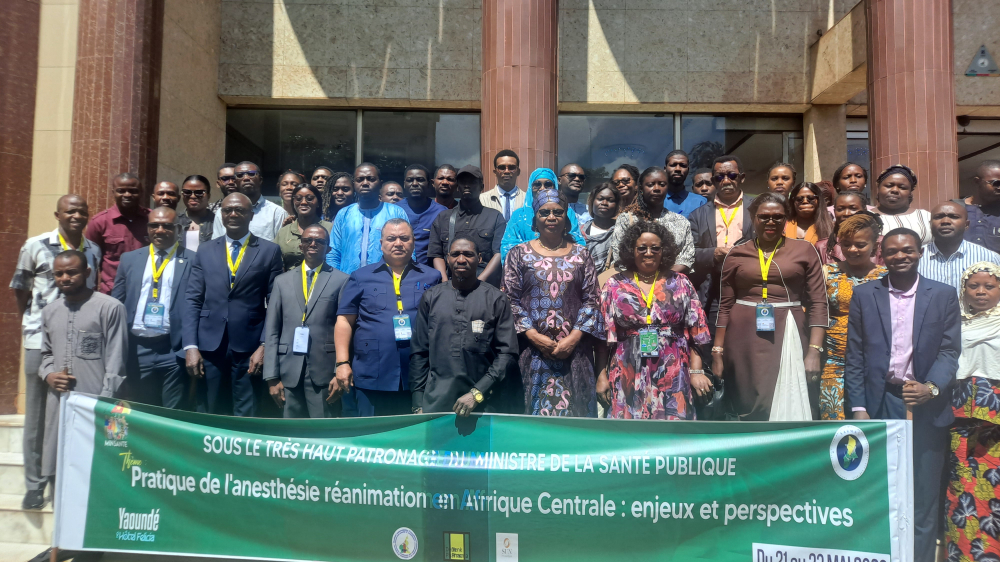
Running from May 21-23, 2026, the opening saw the birth of the Central African Society of Anesthesia, Intensive Care and Emergency Medicine, SARMaC.
A historic chapter in Central African healthcare began on May 21, 2026, as the Central African Society of Anesthesia, Intensive Care and Emergency Medicine (SARMaC) officially launched its inaugural congress. Hosted in the Cameroonian capital, Yaounde, the three-day convention running from May 21–23, 2026, serves as the official birth of a unified regional medical body. It brings together leading medical minds, specialists, and students from across the economic bloc - Cameroon, Gabon and Congo-Brazzaville.
Under the high patronage of Cameroon’s Minister of Public Health, Dr. Manaouda Malachie (represented by the Regional Delegate for Public Health for the Centre Region), the central theme of the congress targets a critical regional vulnerability: "The practice of anesthesia and intensive care in Central Africa: challenges and perspectives."
The Core Crisis
The organizing committee, chaired by Professor Ze Mikande, identified three core sub-themes that currently dominate emergency admissions and mortality rates across the sub-region: Addressing severe complications like pre-eclampsia, eclampsia, and postpartum hemorrhages. Managing injuries resulting from domestic incidents and a surging wave of road traffic accidents. And navigating the rising tide of strokes, heart attacks, diabetes, and hypertension exacerbated by an ageing population.
Not Normal!
"It is not normal for a woman who comes to give life to lose her own," Prof. Ze Mikande emphasized during her opening address, pointing out the tragic reality of sub-regional maternal death rates.
Highlighting the gravity of the situation, Professor Ervais Richard Obame from the University Teaching Hospital, Wendo, Gabon provided a sobering statistical baseline: Gabon faces an alarming 400 maternal deaths per 100,000 live births, compared to industrialized nations like France, which records roughly 10 deaths per 100,000.
Road Trauma, Demographics
Beyond obstetric care, the congress casts light on a shifting epidemiological landscape. Prof. Obame noted that urban environments in Central Africa are facing relatively new crises. Notably a massive surge in severe road traffic accidents involving motorcycles - a phenomenon virtually non-existent in Gabon a decade ago.
Simultaneously, Dr. Raymond Ndikontar, a Cameroonian paediatric anaesthesiologist and critical care specialist, pointed out that rising standards of living and an ageing population across Africa mean hospitals are increasingly overwhelmed by sudden cardiovascular emergencies. Like strokes and heart attacks, requiring urgent systemic alignment.
Brain Drain, Technical Flaws
The delegates collectively acknowledged that clinical intent is severely limited by structural deficits. Prof. Ze Mikande laid bare the shared systemic challenges plaguing Central African hospitals. The sub-region suffers from a low baseline number of trained anesthesiologists and intensivist physicians. Compounding this, a high percentage of newly qualified local professionals migrate abroad for better conditions. Secondly, a widespread lack of modern technical platforms and reliable streams of medical consumables prevents critical care teams from operating at global standards.
Despite these hurdles, the congress celebrated the intense dedication of critical care workers. "The anesthesiologist-intensivist is the first to arrive at the hospital, the first to enter the operating room, and the last to leave," Mikande remarked, calling for increased structural support for the physical and mental health of the practitioners themselves.
Innovation, Auditing, "Early Rehabilitation"
The principal objective of the SARMaC gathering is to harmonize clinical approaches and pool multi-country data into localized, updated guidelines. Gabon brought forward two distinct operational successes to share as regional models:
Professor Jean-Félix Mabasse-Mkadi, Medical Director of the University Teaching Hospital, Libreville (Gabon's largest hospital), detailed a mandatory protocol where any maternal death is legally audited within 48 hours. The process forces an immediate multidisciplinary review to uncover system failures and issue binding recommendations to prevent recurrence.
Gabon’s Early Rehabilitation
Similarly, Gabonese teams also presented models of post-cesarean "early rehabilitation," a protocol that empowers mothers to mobilize and regain independence rapidly post-surgery. Thereby reducing hospital stays and improving early childcare capability.
Furthermore, looking toward modern medical trends, the congress highlights a curriculum that introduces digital health and Artificial Intelligence (AI) solutions, alongside highly practical clinical training. Planned workshops include medical simulations for obstetric emergencies, automated external defibrillator (AED) training, and dedicated coaching clinics for young medical candidates preparing for the rigorous aggregation (medical professorship) examinations.
Vision For Regional Integration
The conference marks the culmination of five years of collaborative planning. While currently spearheaded by Cameroon, Gabon, and Congo, the leadership expressed an urgent desire to fully incorporate lagging sub-regional neighbors, specifically Chad and the Central African Republic, who face steep barriers to accessing international scientific spaces.
As the congress progresses through May 23, 2026, the ultimate deliverable remains clear. A set of unified, contextualized clinical recommendations handed directly to state health ministries to fundamentally alter how medical emergencie...
Cet article complet est réservé aux abonnés
Déjà abonné ? Identifiez-vous >
Accédez en illimité à Cameroon Tribune Digital à partir de 26250 FCFA
Je M'abonne1 minute suffit pour vous abonner à Cameroon Tribune Digital !

- Votre numéro spécial cameroon-tribune en version numérique
- Des encarts
- Des appels d'offres exclusives
- D'avant-première (accès 24h avant la publication)
- Des éditions consultables sur tous supports (smartphone, tablettes, PC)


Reactions
De la meme catégorie

Affaire Martinez Zogo: Le 36e témoin entre en scène
- 27 Oct 2026 10:04
- 0 likes
Cameroon Medical Council: Newly Elected Pledges to Restore Dignity
- 27 Oct 2026 10:03
- 0 likes






Commentaires