

Impending Digital Blackout: Customs Orders Telcos To Sever 700,000 Unregistered Devices
- Par Kimeng Hilton
- 22 May 2026 16:25
- 0 Likes
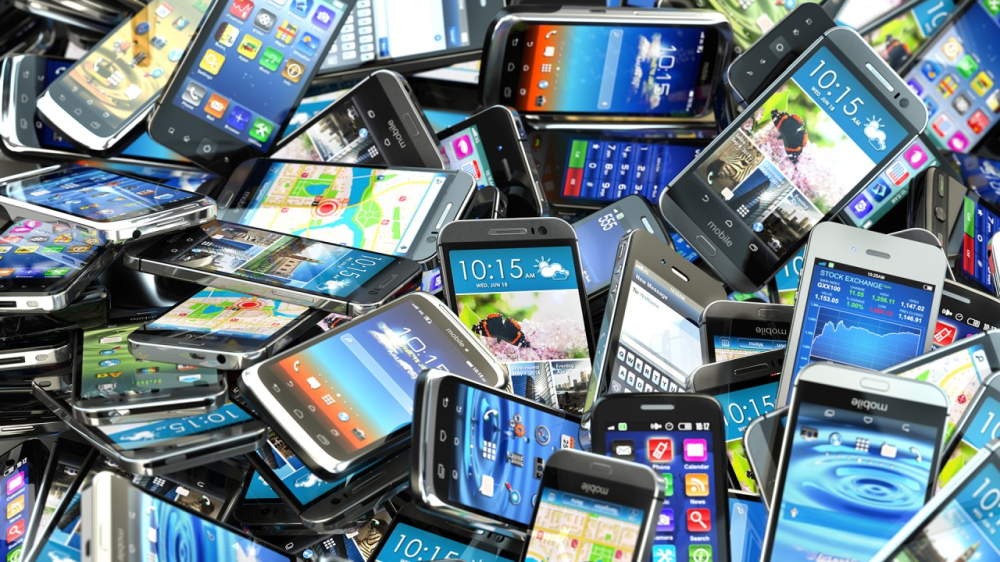
Illegally-imported phones and digital devices will be blocked as from Monday, May 25, 2026. The target is to raise 25 billion FCFA annually.
In a move that represents one of the most aggressive digital revenue protection efforts in Central Africa, the Government of Cameroon has issued a final ultimatum to telecommunications providers. Effective Monday, May 25, 2026, hundreds of thousands of mobile phones, tablets, and digital devices currently operating on local networks will be systematically disconnected and "blacklisted."
No More Bypassing Customs
The order, signed by Fongod Edwin Nuvaga, the Director General of Customs, targets an estimated 700,000 devices that have bypassed customs clearance since the launch of the new digital monitoring platform earlier this year. This "hard reset" of the mobile market is the culmination of a multi-year effort to digitize Cameroon’s borders and recover billions in lost tax revenue.
The Digital Checkpoint
The directive is addressed to the CEOs of the country’s three major telephone operators: Camtel, MTN Cameroon, and Orange Cameroon. It relies on Article 6 of the 2023 Finance Law, which empowers the State to collect a 33.3% customs duty on all imported digital terminals.
Unlike previous attempts in 2020 - which sought to deduct taxes directly from airtime credit and faced immense public backlash - this new system uses International Mobile Equipment Identity (IMEI) numbers. Every phone has a unique 15-digit IMEI. Under the new CAMCIS (Cameroon Customs Information System), any device connecting to a local network must first be matched against a database of cleared imports. If the IMEI isn't in the system, the device is flagged for blocking.
The Role Of The Operators
The Director General's letter is clear: operators are now legally liable. Article 7 of the joint decision stipulates that any carrier allowing an uncleared terminal to connect to its network is responsible for the unpaid duties. This shift moves the burden of enforcement from the customs officer at the airport to the server rooms of the telecom giants.
The 25 Billion FCFA Goal
The stakes are primarily financial. For years, Cameroon has watched its customs revenue from mobile devices plummet. Despite an estimated 4 million devices imported annually, revenue dropped from 12 billion FCFA in the early 2000s to a mere 100 million FCFA per month recently.
The cause? A sophisticated network of smuggling and "suitcase" imports where travelers or informal traders bring in hundreds of high-end smartphones without declaration.
"The state cannot continue to lose revenue while the digital economy booms," stated a representative from the Ministry of Finance. By automating enforcement, the government aims to raise at least 25 billion FCFA ($40 million USD) annually.
The Consumer’s Dilemma
For the average citizen, the reality is stark. On Monday morning, users of unregistered devices will find their SIM cards inactive - not because of the carrier, but because the device itself is barred from the network.
The Regularization Process
To restore service, users must navigate the MPIE (Mobile Phone Identification and Enforcement) portal. The process involves:
Verification: Dialing *#06# to get the IMEI and entering it into the portal.
Tax Assessment: The system calculates the 33.3% duty based on the device's market value.
Payment: Users must pay via Mobile Money or Orange Money.
Whitelisting: Once paid, the device is automatically unblocked.
Exemptions
Fiscal Amnesty: Devices active on Cameroonian networks before April 1, 2026, are automatically "cleared" and exempt.
Tourists: Visitors using international roaming are exempt. Short-term visitors can apply for "temporary admission" for up to 90 days.
Market Disruptions, Public Response
The news has sent shockwaves through the markets in Douala and Yaoundé. In the Akwa electronics hub, prices for "cleared" phones have already spiked by 30%. Informal retailers, who rely on small-scale imports, face an existential threat. "We are being asked to pay 150,000 FCFA in tax for a phone we sell for 450,000 FCFA," says Ibrahim, a local vendor. "The customers will not pay this; they will look for hacked devices or older models."
Security experts also warn of a potential rise in IMEI cloning, where hackers "flash" the identification number of a cleared, cheap phone onto a high-end smuggled one. Customs officials, however, claim the new system is sophisticated enough to detect such duplications.
Milestone In Digital Governance
Beyond revenue, the government views this as a security triumph. By having a central registry of every active IMEI, the state can more effectively track stolen devices and combat digital ...
Cet article complet est réservé aux abonnés
Déjà abonné ? Identifiez-vous >
Accédez en illimité à Cameroon Tribune Digital à partir de 26250 FCFA
Je M'abonne1 minute suffit pour vous abonner à Cameroon Tribune Digital !

- Votre numéro spécial cameroon-tribune en version numérique
- Des encarts
- Des appels d'offres exclusives
- D'avant-première (accès 24h avant la publication)
- Des éditions consultables sur tous supports (smartphone, tablettes, PC)








Commentaires