

Beyond The Finery: Cameroonian Muslims Celebrate Submission, Forgiveness, Love
- Par Kimeng Hilton
- 27 May 2026 13:09
- 0 Likes
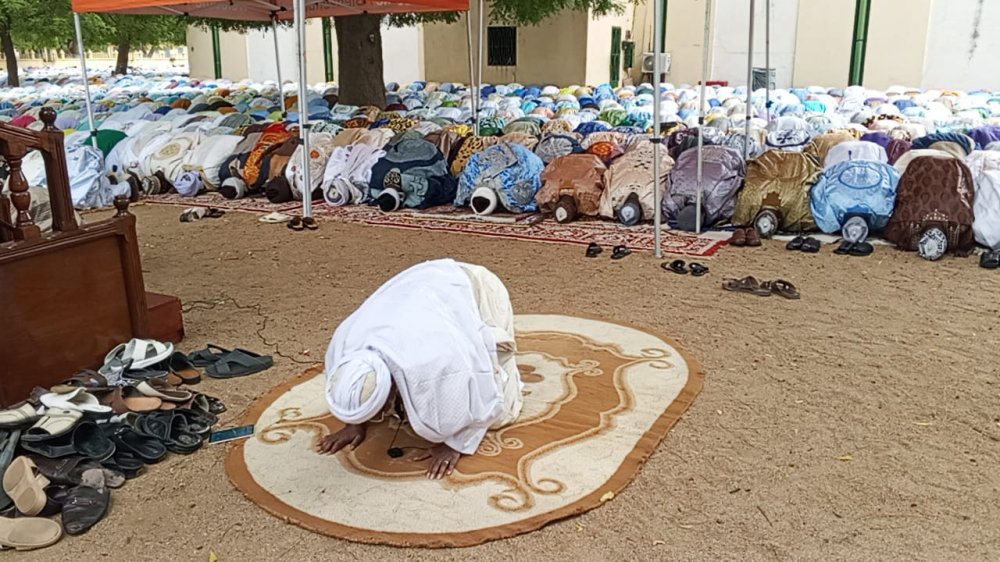
Eid al-Kabir, popularly known locally as the Tabaski feast, is being marked this May 27, 2026 by Moslems across the globe.
On May 27, 2026, the Muslim community in Cameroon joined millions across the globe to celebrate Eid al-Kabir, popularly known locally as the Tabaski feast. Despite heavy early morning rains that stalled some faithful in their homes within the capital, Yaounde and parts of the Centre Region, tens of thousands turned out in massive numbers at open-air prayer grounds and central mosques across the country.
In Their Best Outfits
Clad in immaculate white gowns and vibrant, starched boubous, worshippers crouched on their prayer mats to listen to moving sermons centered on absolute faith, communal resilience, and national peace. Clerics throughout the national territory invoked the ultimate test of Prophet Abraham (Ibrahim), who was ready to sacrifice his son, Ishmael, out of obedience to divine command before Almighty Allah intervened to provide a ram for the altar.
A Heart At Peace
In Yaoundé and surrounding subdivisions like Mfou, the celebrations took on a deeply reflective tone. Worshippers in rural enclaves like Nkolnda and Nkolngok braved the weather to offer their thanks.
Speaking on the deeper spiritual dimensions of the day, Hadidja Iyarchime Gueime, a Muslim faithful in Yaoundé, emphasized that the event stretches far beyond outward aesthetics: "For me, the celebration represents much more than just a simple moment of rejoicing... It's a time of faith, of gratitude, of sharing, and elegance in respecting Islamic values. The celebration isn't just about dressing up, it's not just about eating, and then it passes. No. It's especially... a heart at peace, grateful and filled with love."
For working professionals like Mr. Hamza Danzanbe, a resident of Emana, Yaounde, the contemporary application of Abraham’s sacrifice means living a life marked by integrity and clarity. "As a Muslim, you must be submissive, obedient - your yes is yes, no is no," Hamza remarked as he prepared for prayers. "We should know the do's and the don'ts."
Sowing The Fields
In stark contrast to the downpours of the Centre Region, the Far North Region enjoyed favorable weather. In Lara, located within the Mayo Kani Division, the air was light with the promise of the coming agricultural season.
The Imam of Lara, Malla Mal Hammadou, led congregants in prayers alongside the traditional ruler, Alhadji Daouda Ahmadou Zoua, the Lamido of Lara. In his sermon, the Imam synthesized religious obligation with civic duty, explicitly praying for national stability and stable weather for local farmers.
"We ask for peace in Cameroon, and that God grants good rain for sowing," the Imam told Cameroon Tribune Online by phone from Lara, noting that light rains had begun falling to announce the rainy season. "We ask God for good rain without violence to go out to the fields... rain without strong winds."
According To Means
The Imam also reminded the faithful of the strict protocols governing the ritual sacrifice (Qurbani). Highlighting that the act depends entirely on financial capacity, he warned: "You shouldn't steal to make that sacrifice. It depends on the means." He further detailed that proper custom demands the ram's skin never be sold, but rather given away to those in need. Following the religious sermon, the Lamido Alhadji Daouda Ahmadou Zoua took to the grounds to offer parallel counsel. Urging the public to protect their communities against thieves and to actively cultivate, rather than abandon, their local fields.
Strengthening Social Ties
The message of shared communal responsibility was echoed strongly in other parts of the country. In the Diamaré Division of the Far North, Rashidatou Adama - a Muslim woman celebrating in Kodek - pointed out that women sit at the literal epicenter of the holiday's social framework.
"The woman in Islam is quite at the center of the family," Adama explained. "She manages the children, the home, and she prepares food. She is the one who also knows her surroundings, because this is a feast of sharing." Adama stressed that the meat from slaughtered livestock is intended to break down societal barriers, consolidating ties between Muslims and non-Muslims alike through mutual visits.
Good Citizens
In the South West Region, Alhadji Mudhammad Aboubakar, the Chief Imam of the Central Mosque of Buea and Regional President of the Council of Imams and Muslim Dignitaries of Cameroon, CIDIMUC, strongly tied the religious observation to state citizenship.
"Respect of God’s law invariably has to do with the respect of the Republican law," Imam Aboubakar told Cameroon Tribune Online in a phone interview. He challenged Cameroonians to look beyond individualistic mindsets:
"Today, people generally don't like to sacrifice. They think of self, they don't think of community. If you think about community, you will definitely sacrifice what you love most to please your neighbor... As the Prophet Muhammad said: 'Love for your brother what you love for yourself, protect for your brother what you protect for yourself.'"
Completing The Sacrifice
Further in the North West region in Nkambe, Donga-Mantung Division, Moslems like Mrs. Hajara Danjuma expressed profound personal peace after completing their sacrifice. Noting that while cows, camels, or goats are acceptable depending on regional availability, the local community overwhelmingly favored sheep to fulfill the religious requirement.
Next Three Days
As the country transitions into the three days of festivities following the primary prayers, the overarching sentiment left behind by clerics and citizens alike remains clear. True celebrat...
Cet article complet est réservé aux abonnés
Déjà abonné ? Identifiez-vous >
Accédez en illimité à Cameroon Tribune Digital à partir de 26250 FCFA
Je M'abonne1 minute suffit pour vous abonner à Cameroon Tribune Digital !

- Votre numéro spécial cameroon-tribune en version numérique
- Des encarts
- Des appels d'offres exclusives
- D'avant-première (accès 24h avant la publication)
- Des éditions consultables sur tous supports (smartphone, tablettes, PC)


Reactions
De la meme catégorie

Affaire Martinez Zogo: Le 36e témoin entre en scène
- 27 Oct 2026 10:04
- 0 likes
Cameroon Medical Council: Newly Elected Pledges to Restore Dignity
- 27 Oct 2026 10:03
- 0 likes




Commentaires