

Rights Offline, Rights Online: The Push To Modernize Cameroon’s Digital Governance
- Par Kimeng Hilton
- 08 Jun 2026 16:36
- 0 Likes
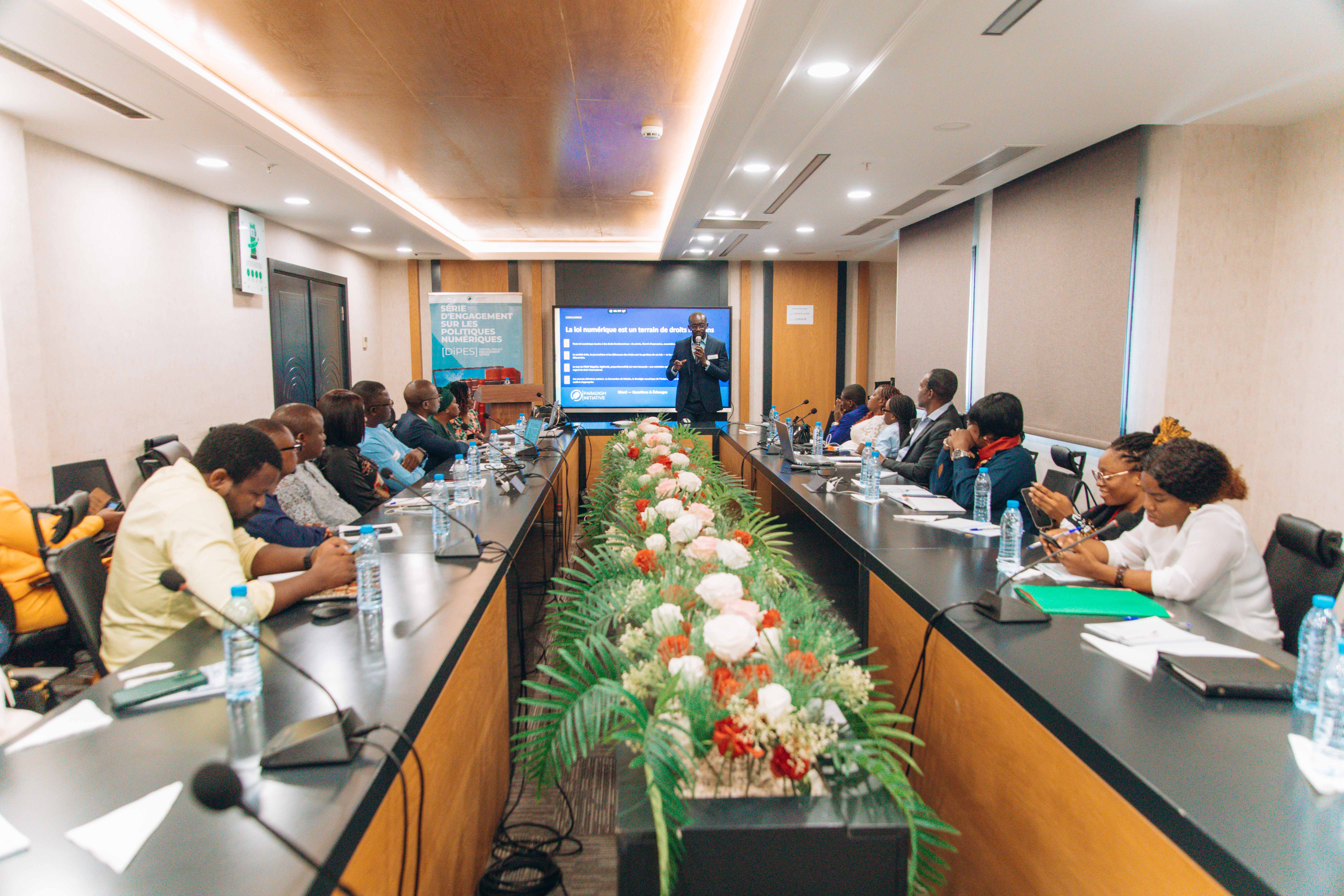
Two civil society organizations, Paradigm Initiative and Civic Watch Cameroon, on June 8, 2026 in Yaounde organized a digital rights advocacy workshop.
In a major push for legislative reform, digital sector stakeholders and human rights defenders converged in Yaoundé, Cameroon on Monday, June 8, 2026, to advocate updates to Cameroon’s digital governance laws. Organizers explicitly timed the event to arm civil society with advocacy strategies ahead of the upcoming June session of Parliament, urging activists to hold MPs and senators accountable for ongoing digital rights violations.
Joint Activity
The dual-event - comprising the Digital Policy Engagement Series, DIPES and the Digital Rights Academy, DRA - was jointly organized by Pan-African digital rights organization, Paradigm Initiative and local partner, Civic Watch Cameroon. The forum assembled public policymakers, regulators, Civil Society Organizations, CSOs, legal experts, and journalists. To assess how local frameworks align with international human rights standards regarding freedom of expression, privacy, and access to information.
Policy Gaps, 'Distorted' Laws
The primary focus of the discussions centered on how existing state legislation - specifically Law No. 2010/013 on Electronic Communications (amended in 2015) and Law No. 2010/012 on Cybersecurity and Cybercrime are being applied. Advocates warned that while these laws are ostensibly designed to protect the public, their implementation frequently defaults to weaponized censorship.
"There is a trend that has been observed across some African countries where laws on cybercrime and cybersecurity are often distorted to repress free speech and target critical people. Whether they are activists, journalists, or political opponents," said Moussa Waly Sene, Programmes Officer for Francophone Africa at Paradigm Initiative. "The importance of this session is to formulate recommendations to the legislature so that the gaps and impediments detected in these laws are addressed by the National Assembly," Moussa explained.
International Treaties, Local Reality
A central critique raised during the forum was Cameroon's systemic failure to harmonize its local statutes with international agreements it has already ratified. Thobekile Matimbe, Senior Manager of Partnerships and Engagements at Paradigm Initiative, highlighted the gap between international commitments, such as the African Union’s Malabo Convention, and domestic implementation. Pointing specifically to Cameroon’s Data and Information Protection Law of 2024.
"It is one thing to have a law anchored in an international engagement, but how well are these laws implemented locally?" Thobekile Matimbe questioned. Addressing the ongoing continent-wide issue of internet shutdowns and the criminalization of "false news," she added: "The UN has elaborated that all rights enjoyed offline must also be enjoyed online. There is nothing new we are creating. We are advocating for the same rights articulated in existing treaties that Cameroon has signed."
Push Beyond 'Traditional Seminars'
Organizers emphasized that this year’s engagement marks a deliberate departure from passive advocacy toward measurable, systemic accountability. The Digital Rights Academy specifically focused on building the capacity of CSOs to document digital rights abuses and pursue formal legal remedies against perpetrators.
To ensure the judiciary keeps pace with the digital age, Dr. Ngala Desmond Ngala, Founder and CEO of Civic Watch Cameroon, announced an upcoming training pipeline modeled after successful initiatives in neighboring countries.
"We will be working from now onwards to ensure that members of the forces of law and order and members of the judiciary are well-drilled," Dr. Ngala stated. "You are trained as a magistrate to interpret the law, but when you were trained, there was no AI. Digital rights were not what they are today. Public authorities have come out clearly to say this is a real problem, giving us a level playing ground to collaborate."
Cameroon’s Strides
While acknowledging some positive strides made by Cameroon - such as establishing policy frameworks to protect children online – participants observed that the country still fails to rank among the top performers on the continent due to structural issues like digital disruptions. The forum concluded with a unified call to the media to prioritize fact-checking and public digital literacy, underscoring the baseline tenet that digital rights are, fundamentally, human rights.
International Treaties, Local Reality
A central critique raised during the foru...
Cet article complet est réservé aux abonnés
Déjà abonné ? Identifiez-vous >
Accédez en illimité à Cameroon Tribune Digital à partir de 26250 FCFA
Je M'abonne1 minute suffit pour vous abonner à Cameroon Tribune Digital !

- Votre numéro spécial cameroon-tribune en version numérique
- Des encarts
- Des appels d'offres exclusives
- D'avant-première (accès 24h avant la publication)
- Des éditions consultables sur tous supports (smartphone, tablettes, PC)


Reactions
De la meme catégorie

Affaire Martinez Zogo: Le 36e témoin entre en scène
- 27 Oct 2026 10:04
- 0 likes
Cameroon Medical Council: Newly Elected Pledges to Restore Dignity
- 27 Oct 2026 10:03
- 0 likes





Commentaires