

2027 Yaounde Cultural Marathon: Organizers Set Sights On Enhanced Participation, Global Stature
- Par Kimeng Hilton
- 03 Aug 2026 13:47
- 0 Likes
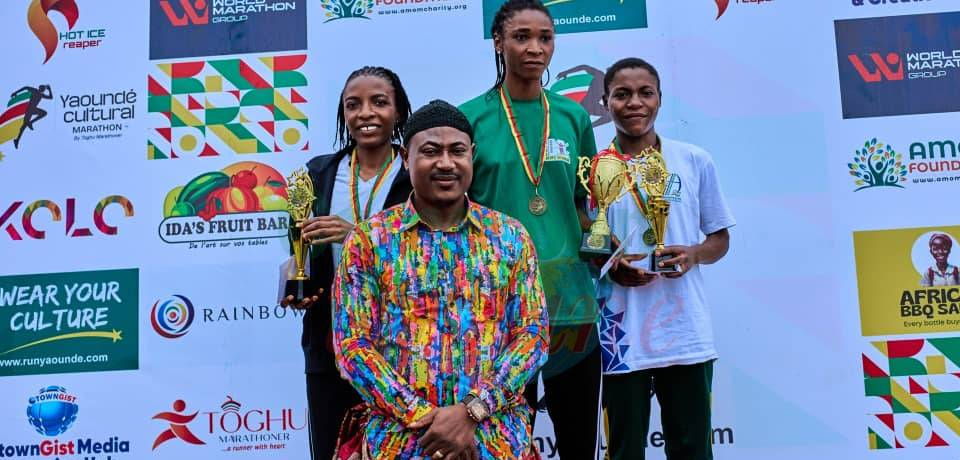
Race promoter, Afowiri Kizito Fondzenyuy - the “Toghu Marathoner” – has promised participants and stakeholders a much extended planning timeframe.
Following the historic successful staging of its inaugural race on July 18, 2026, preparations are already aggressively underway for the 2027 edition of the Yaoundé Cultural Marathon. Having established a robust proof of concept on new terrain in the heart of Cameroon's capital city, organizers are moving swiftly to refine operational mechanics, broaden international athlete engagement. And provide participants, visiting families, corporate sponsors, and institutional partners with a significantly extended planning horizon.
Bridged Social, Physical Divides
The inaugural event transformed the esplanade of the prestigious National Museum in Yaoundé into a sprawling celebration of athletics, public health, and national heritage. Designed explicitly as an inclusive community-centered festival, the inaugural race successfully bridged social and physical divides. By bringing together elite competitive runners, recreational joggers, schoolchildren, families, people living with physical disabilities, and neuro-divergent participants.
2026 Year Races
The debut schedule featured a 10km Cultural Race, a 5km Cultural Run, a 2km Children’s Fun Run, and an Inclusive Walk. These athletic events unfolded alongside live musical performances, regional dance exhibitions, and vibrant local community activities. The ambition behind the event was spearheaded by promoter Afowiri Kizito Fondzenyuy, universally recognized as the “Toghu Marathoner.”
Fondzenyuy is a Guinness World Record holder for running the fastest marathon in traditional Toghu attire and an Abbott World Marathon Majors Six-Star finisher. He believes the debut race proved that sports tourism and cultural pride can comfortably coexist in a single public space.
Early Race Preparations
“The first edition showed us that people truly believe in this idea,” Fondzenyuy explained to Cameroon Tribune Online. “The next logical step is to begin our preparations much earlier, elevate the technical and hospitality experience for athletes and visiting families. And give our international partners sufficient lead time to build meaningful collaborations.”
International Presence
Despite a compressed two-month preparation window for the inaugural race, the Yaoundé Cultural Marathon recorded a notable international presence right out of the gate. Athletes and visiting families from France, Japan, Kenya, and the United States lined up alongside local Cameroonian runners. Giving the maiden edition a distinctive multicultural atmosphere.
Quality Foreign Participation
That international participation translated directly into high-level athletic performance on the road. Kenya’s Jepkoech Marion claimed victory in the women’s 10km Cultural Race, crossing the finish line at the National Museum in 37 minutes, 53.61 seconds. Her victory provided the event with an immediate stamp of elite competitive credibility. Demonstrating that the course and climate in Yaoundé can attract high-performing runners from nations with deep, dominant running traditions.
Foreign Participant Pool
To build on this foundation, the primary objective for the 2027 edition is to expand the geographical diversity of the participant pool. Organizers are initiating early outreach campaigns targeting global running clubs, foreign diplomatic missions in Cameroon, regional tourism boards. Cameroonian diaspora associations across Europe and the Americas, and international athletic networks. Fondzenyuy argues that the marathon must evolve into a primary catalyst for international travel rather than being perceived strictly as a localized road race.
Premier Family Travel Destination
“We want the Yaoundé Cultural Marathon to become a premier family travel destination,” Fondzenyuy noted. “Our vision is to see parents and children traveling to Cameroon during their summer vacations, taking part in different race categories suited to their abilities. And exploring the capital city and immersing themselves in the cultural richness of our country.”
Public Health Movement
While the organizing committee works to draw international athletes to central Africa, Fondzenyuy insists that the marathon’s core responsibility remains rooted in public health and community empowerment within Cameroon. The annual event will serve as a continuous platform to raise public awareness regarding the cardiovascular, mental, and social benefits of regular exercise, running, and walking.
Not For Professionals Only
A central mission of the project is dismantling the widespread cultural stereotype that road races are exclusively reserved for professional athletes or elite runners who undergo intense physical training.
The Yaoundé Cultural Marathon is intentionally formatted as an accessible experience for everyday citizens across all social and professional sectors. Including students, farmers, commercial drivers, civil servants, security personnel, teachers, market traders, corporate workers, and elected officials.
Symbol Of Personal Resilience
Organizers emphasize that while crossing the finish line first remains important for competitive runners, podium finishes will never serve as the sole benchmark of success. For the vast majority of participants, the true victory lies in committing to training. Stepping up to the start line, and completing the distance within a supportive, festive environment. The commemorative finisher medal is designed to serve as a tangible, lasting symbol of personal resilience, physical effort, and shared cultural pride.
Cultural Carnival Components
Moving forward, organizers intend to further distinguish the Yaoundé Cultural Marathon from standard athletic fixtures by developing it into a high-energy "sports carnival". The vision integrates athletic competition directly with African fashion, traditional culinary arts, live music, and theatrical performance.
Traditional Regalia
In a unique departure from conventional running etiquette, participants will be explicitly encouraged to wear running kits and attire inspired by the cultural aesthetics, regional textiles, and traditional symbols of their home communities and countries.
Along the running route and around the centralized start-and-finish village at the National M...
Cet article complet est réservé aux abonnés
Déjà abonné ? Identifiez-vous >
Accédez en illimité à Cameroon Tribune Digital à partir de 26250 FCFA
Je M'abonne1 minute suffit pour vous abonner à Cameroon Tribune Digital !

- Votre numéro spécial cameroon-tribune en version numérique
- Des encarts
- Des appels d'offres exclusives
- D'avant-première (accès 24h avant la publication)
- Des éditions consultables sur tous supports (smartphone, tablettes, PC)







Commentaires