
Climate Change: Embedding The Dynamics Into National Migration Policy
- Par Kimeng Hilton
- 19 Aug 2026 11:19
- 0 Likes
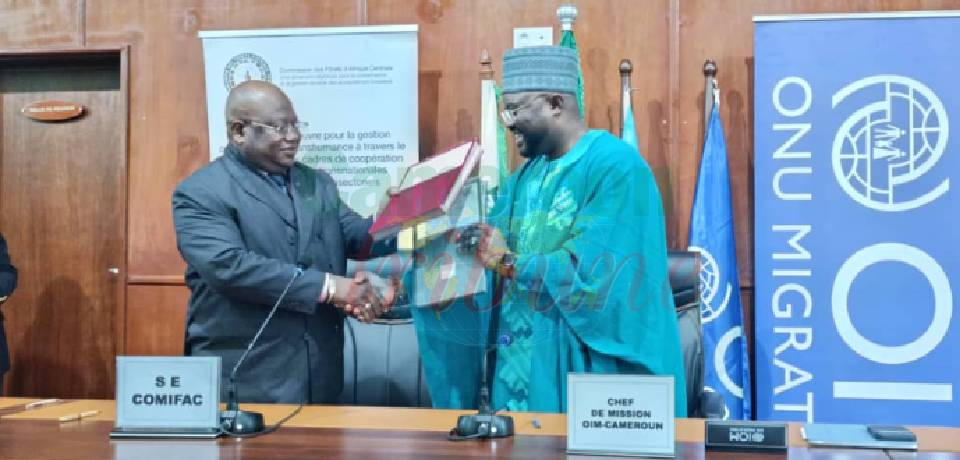
The International Organization for Migration, IOM and the Central African Forest Commission, COMIFAC on August 14, 2026 in Yaounde penned a Memorandum of Understanding.
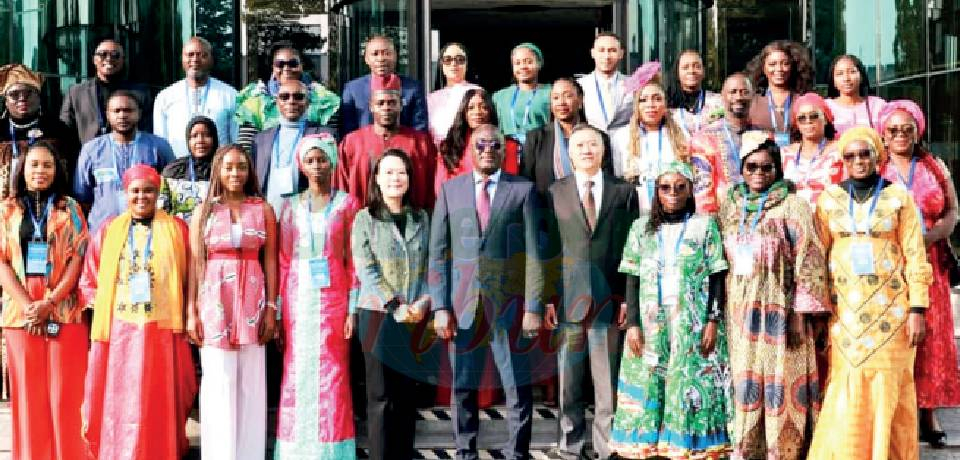
In a major step toward addressing one of the most pressing socio-environmental challenges facing Central Africa, high-level policy makers, environmental experts, UN officials, and civil society leaders gathered in the Central African Forest Commission, COMIFAC, Yaounde. The national consultation focused on a critical objective. Systematically integrating environmental degradation and climate change considerations into drafting Cameroon’s upcoming National Migration Policy, NMP.
Data-driven Framework
Supported financially by the European Union, EU, the event was jointly organized by the International Organization for Migration, IOM, the Central African Forest Commission, COMIFAC. And Cameroon’s National Observatory on Climate Change, ONACC. The gathering served a dual purpose. To establish a coherent, data-driven framework for national migration governance. And to sign a landmark Memorandum of Understanding, MoU between IOM and COMIFAC to protect forest ecosystems and displaced populations across the region.
Mounting Climate Crisis
Across Cameroon, human mobility patterns are increasingly dictated by environmental pressures and changing weather extremes. The country’s diverse geography - spanning Sahelian northern plains, dense equatorial rainforests, and an extensive Atlantic coastline - makes it acutely vulnerable to the multifaceted shocks of global warming.
In Past Decades
Over the past four decades, northern Cameroon has experienced rainfall declines of up to 25%. Prolonged droughts have degraded arable lands, disrupted traditional transhumance routes for pastoralists, and severely heightened competition over dwindling water and grazing resources.
Coastal communities are battling severe shoreline retreat, with erosion consuming between 1 and 3 metres of beach and land per year. Rising sea levels threaten coastal infrastructure, displace riverine and fishing populations, and compromise local livelihoods. Without structured policy intervention, these slow-onset environmental stressors threaten to accelerate forced displacement, exacerbate rural-to-urban migration, and deepen vulnerability across affected populations.
Historic Regional Alliance
A pivotal moment of the day was the signing of the Memorandum of Understanding, MoU between IOM and COMIFAC. Speaking during the signing, M. Hervé Martial Maidou, Executive Secretary of COMIFAC, outlined why this partnership represents a major structural shift for forest governance in Central Africa.
"The fact that we signed this MoU with the International Organization for Migration is part of the implementation of COMIFAC’s Convergence Plan," declared Mr. Maidou. "COMIFAC is currently reviewing the provisions of its Convergence Plan to integrate aspects related to community displacement. Often, there is a negative impact on the management and governance of forest resources and biodiversity. Therefore, we need to build a solid institutional and legal foundation to support communities," Maidou explained.
Mr. Maidou added that the MoU sets the stage for a long-term partnership aimed at safeguarding community rights. While simultaneously reinforcing environmental protection, forest conservation, and climate adaptation strategies.
Framing Climate Mobility
In his keynote remarks, M. Abdel Rahmane Diop, Chief of Mission for IOM Cameroon, underscored that human migration cannot be analyzed or managed in isolation from the natural environments where it occurs.
"Migration takes place in an environment. Migration takes place in a landscape, and one of the most important landscapes in Central Africa is the forest," Mr. Diop stated. "We cannot pretend to manage migration without giving full interest to some of these ecosystem areas where people are living and moving," Abdel Rahmane Diop noted.
Complex Dynamics
Mr. Diop drew attention to the complex dynamics in Central Africa. Where security conflicts and environmental degradation intersect, forcing displaced populations to seek refuge within forest ecosystems. He laid out three core imperatives for the partnership: Building robust mechanisms to collect accurate data and information regarding climate-induced human movements.
Properly managing human mobility to prevent negative ecological impacts on forest ecosystems. And transforming forest landscapes into sustainable, income-generating hubs for youth and women. So they can thrive within their home communities rather than being forced to migrate out of necessity.
Quoting the World Bank’s Groundswell report, Mr. Diop reminded delegates that climate change could drive up to 216 million internal climate migrants globally by 2050. Including 86 million in Sub-Saharan Africa alone - unless early, coordinated action is taken.
Breaking Down Silos
A primary goal of the consultation was to ensure that Cameroon’s National Migration Policy does not become another standalone, isolated document. Instead, participants focused on bridging policy silos and embedding climate mobility across existing national frameworks.
The future NMP will align directly with the National Development Strategy 2020–2030; Nationally Determined Contributions under the Paris Agreement; National Climate Change Adaptation Plan, and the National Scheme for the Sustainable Development of the Territory.
Through technical presentations led by ONACC Director General Prof. Joseph Armathé Amougou and IOM specialists, experts explored early warning systems, vulnerability mapping. And the operational integration of Migration, Environment, and Climate Change, MECC data into state planning.
Focus Areas, Working Groups
During the afternoon session, participants divided into three specialized working groups to tackle critical climate-mobility corridors in Cameroon. Group 1 analyzed policy responses required for coastal erosion, sea-level rise. And flooding affecting fishing and riverine communities along the Atlantic coastline.
Group 2 focused on northern regions, addressing shifting pastoral routes, land degradation, and mechanisms to prevent conflicts between herders and farmers. While Group 3 examined the pressures exerted on major cities by climate-induced rural-to-urban migration. Emphasizing sustainable urban planning and infrastructure resilience.
Closing Commitments
In his closing address, Mr. Abdel Rahmane Diop commended the constructive dialogue and emphasized that the ultimate test of the consultation lies in practical implementation.
"The test of today’s consultation will be implementation: clear responsibilities, realistic timelines, financing mechanisms, data systems, and measurable indicators," Mr. Diop stated. "Let this MoU be a working instrument, not simply a signed document: a platform for joint action, measurable results, and stronger resilience."
Shared Pledge
The event concluded with a shared pledge from the Government of Cameroon, ONACC, COMIFAC, IOM, and the European Union to translate the day's recommendations into operational programmes. Ensuring that climate adaptation and human protection remain at the heart of Cameroon’s national development agenda.
Kimeng Hilton NDUKONG
Cameroon and regional partners are rewriting the playbook on climate-induced mobility.
……………………………………………………………………………………………………..
Herve Martial Maidou, the Executive Secretary, Central Africa Forests Commission, COMIFAC.
And the fact that we signed this MoU with the International Organization for Migration, IOM, is part of the implementation of COMIFAC’s Convergence Plan.
COMIFAC is currently reviewing the provisions of its Convergence Plan to integrate aspects related to community displacement. Often, there is a negative impact on the management and governance of forest resources and biodiversity.
Therefore, we need to build a solid institutional and legal foundation to support communities. IOM is an organization recognized by institutions, but it also supports community structures in the management and governance of their resources.
Thus, this MoU we signed is to launch a long-term partnership in supporting communities—not only regarding their rights, but also on environmental protection, preservation, and climate change issues.
Thank you."
………………………………………………………………………………………
M. Abdel Rahmane Diop – Chief of Mission, IOM Cameroon.
I'm very pleased and, uh, a great opportunity to be, um, in the company today of, uh, the Executive Secretariat of the COMIFAC, um, and also the Director General of ONACC.
Um, migration takes place in environment. Migration takes place in landscape, and one of the most important landscapes in Central Africa is the forest. So, we cannot pretend to manage migration without giving, uh, the full interest into, um, some of these ecosystem areas where people are living, moving.
And you know that in Central Africa, some of the countries are also affected by conflicts. People are being forced to move. And unfortunately, or fortunately sometimes, forests are areas where they will go to find refuge.
How can we work together to make sure that:
We have enough information and data about this phenomenon. How do we make sure that we manage properly this movement in a way that it does not affect negatively the ecosystem of the forest? How can we make sure that the forests are also income-generating, um, source for youth, so that, um, the youth and the women can, um, stay in their own country, um, be successful?Uh, thank you.
……………………………………………………………
statement by the Chief of Mission of the International Organization for Migration in Cameroon, Abdel Rahmane Diop – Chief of Mission, IOM Cameroon
On the occasion of the signing of the Memorandum of Understanding between IOM and COMIFAC and the opening of the thematic consultation on migration, environment and climate change
Mr. Executive Secretary of the Central African Forests Commission;
Secretaries-General representing the Ministries;
Mr. Director General of the National Observatory on Climate Change;
Representatives of public administrations;
Representatives of regional institutions, international organizations, civil society, academia, and the private sector;
Dear colleagues from the United Nations System;
Dear partners;
Distinguished guests, all protocols observed;
Ladies and Gentlemen,
It is a real pleasure for me to speak on the occasion of this meeting, which marks an important milestone in strengthening cooperation between the International Organization for Migration and the Central African Forests Commission. But beyond the signature we are witnessing today, this is about building a practical bridge between migration governance, climate action and sustainable territorial development.
On behalf of IOM, I would like to sincerely thank the Executive Secretary of COMIFAC and all his staff for their availability, commitment, and the quality of dialogue that led to the Memorandum of Understanding we are signing today.
This signing reflects our shared commitment to better integrate human mobility issues into policies and programs related to environmental protection, sustainable natural resource management, and the fight against the effects of climate change. It is a partnership designed to move from policy coherence to concrete action: data, evidence, capacity, joint programming and resource mobilisation.
The relationships between migration, the environment, and climate change are complex and multifaceted. Environmental degradation and climate phenomena can weaken livelihoods, heighten population vulnerabilities, and influence decisions to stay, move, or seek new opportunities elsewhere. The evidence is increasingly clear: climate change is not only an environmental issue; it is also a mobility, development and human security issue.
It is therefore essential that these issues be addressed cross-cuttingly in public policies. This requires strengthening available knowledge and data, improving coordination among relevant institutions, and promoting responses that account for the realities of individuals and communities exposed to environmental and climate risks. The World Bank’s Groundswell report estimates that climate change could drive up to 216 million people to move within their own countries by 2050, including up to 86 million in Sub-Saharan Africa. The report also shows that early, concerted action can substantially reduce this scale.
The Memorandum of Understanding between IOM and COMIFAC will provide a framework to translate this ambition into results. Specifically, it should facilitate the sharing of expertise, the production and use of data, institutional capacity building, the development of joint initiatives, and the mobilization of partnerships and resources. Our objective should be simple: better evidence, better coordination, and better decisions.
This collaboration will also contribute to aligning migration policies with environmental and climate strategies at both national and regional levels. It will allow for the promotion of solutions tailored to local contexts, with special attention given to women, youth, displaced persons, and communities whose livelihoods depend heavily on natural resources. In other words, we must ensure that no one is left behind as climate and environmental pressures reshape mobility patterns.
Ladies and Gentlemen,
Today's ceremony also takes place within the framework of the drafting process for Cameroon's National Migration Policy. In this regard, the thematic consultation dedicated to migration, environment, and climate change constitutes a strategic space to bring forward orientations directly usable in this future policy. The ambition is not to produce another standalone document, but to strengthen coherence across existing national frameworks, including the SND30, the NDC, the PNACC and the SNADDT, and to avoid policy silos.
It should enable us to better understand the dynamics observed in Cameroon, identify gaps in current mechanisms, and formulate concrete recommendations to ensure these issues are properly addressed in the future national policy. We need recommendations that are actionable: who does what, with which data, with which financing, and with what indicators of progress.
I would therefore like to invite all participants to contribute actively and freely to the discussions. The diversity of institutions, experience, and expertise gathered in this room represents a true asset. It must help us build realistic, inclusive guidelines capable of being translated into action.
I would like to commend the participation of the National Observatory on Climate Change and thank its Director General for his engagement in this consultation. The expertise of ONACC, COMIFAC, and the various administrations and organizations represented will be decisive in informing discussions and consolidating recommendations.
IOM reaffirms its readiness to support the Government of Cameroon in developing an inclusive, coherent, operational, and evidence-based migration policy. We stand ready to support the Government and national partners with evidence, technical assistance, capacity development and partnerships, from policy design to implementation and monitoring.
In conclusion, I hope the signing of this Memorandum of Understanding opens a new phase of dynamic, concrete, and results-oriented collaboration between our two institutions. Let this MoU be a working instrument, not simply a signed document: a platform for joint action, measurable results and stronger resilience.
I also express the wish that the work of this consultation yields relevant recommendations capable of guiding public policies and future interventions.
Thank you for your kind attention.
CLOSING REMARKS OF THE THEMATIC CONSULTATION ON MIGRATION, ENVIRONMENT AND CLIMATE CHANGE by Abdel Rahmane Diop, Chief of Mission, IOM Cameroon
Mr. Director General of the National Observatory on Climate Change;
Mr. Executive Secretary of the Central African Forests Commission;
Representatives of public administrations;
Representatives of partner institutions, civil society, academia, and the private sector;
Dear colleagues from the United Nations System;
Dear partners;
Distinguished guests, all protocols observed;
Ladies and Gentlemen,
At the conclusion of this workday, on behalf of the International Organization for Migration, I would like to express our deep gratitude to everyone who contributed to the success of this thematic consultation dedicated to migration, environment, and climate change. Today’s discussions have reminded us that climate mobility is not a distant scenario. It is already part of the policy landscape we must manage.
Cet article complet est réservé aux abonnés
Déjà abonné ? Identifiez-vous >
Accédez en illimité à Cameroon Tribune Digital à partir de 26250 FCFA
Je M'abonne1 minute suffit pour vous abonner à Cameroon Tribune Digital !

- Votre numéro spécial cameroon-tribune en version numérique
- Des encarts
- Des appels d'offres exclusives
- D'avant-première (accès 24h avant la publication)
- Des éditions consultables sur tous supports (smartphone, tablettes, PC)


Commentaires