

Conservation Versus Survival: Rampaging Elephants Besiege Sembot Village
- Par Kimeng Hilton
- 26 Aug 2026 14:58
- 0 Likes
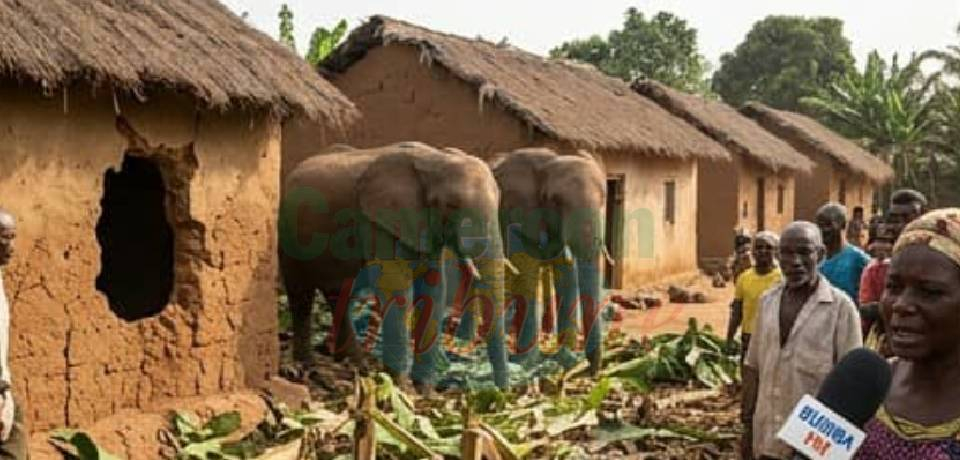
Farmers in the locality in Yokadouma Subdivision, Boumba and Ngoko Division of East Region have literally been trapped in their homes for six months as the herd has since doubled in size.
In the sleepy agricultural enclave of Sembot - a neighborhood within Congo Village in Yokadouma Subdivision, Boumba and Ngoko Division of East region - a human-wildlife crisis has reached a boiling point. According to Rigobert Alondja, a journalist and Station Manager of Boumba FM radio station in Yokadouma, it all began six months ago. With sporadic visits by a small family of pachyderms from the nearby Boumba Bek National Park. But has since escalated into an outright siege.
Initial Verification Visit
A formal verification report filed by Mechia Ntoupouen Ibrahim, a Tropical Forestry Engineer serving with Boumba Bek National Park who undertook an initial inspection on June 7, 2026, three elephants were causing damage. However, a follow-up assessment conducted by Ibrahim on August 21, 2026, confirmed that the herd has doubled in size to six massive elephants (five adults and one calf). Systematically roaming from plantation to plantation and neighborhood to neighborhood across Congo Village.
Reign Of Terror
The agricultural devastation across Sembot is total. Cassava, maize, groundnut, and plantain fields - the sole food source and economic lifeline for local families - have been trampled and consumed. Driven closer to human settlements, the animals have now invaded residential zones. Knocking over solar streetlights outside family homes, crushing metal storage containers, and dragging sacks of feed off verandas.
Local farmer Azegue Geston Joël recounted the daily terror facing the community, detailing how the herd dragged a sack of fish feed directly onto his veranda and crushed his storage drums.
“Face-to-face With Death”
"When you see an elephant standing right in front of you, it's face-to-face with death," Joël stated during an on-site interview with park officials. Explaining why traditional scaring tactics like banging pot lids are no longer effective against the bold herd. Terrified residents have spent days locked inside their homes, completely unable to tend to their farms. Bringing the village face-to-face with acute hunger and economic ruin.
And The Law?
This ongoing disaster exposes a painful tension within Cameroonian environmental law, placing vulnerable communities in a legal vice. Under Cameroon’s Law No. 94/01 of January 20, 1994 (governing forestry, wildlife, and fisheries), the elephant is classified as a Class A species. Animals in this tier are fully protected by the state.
The law strictly prohibits killing, capturing, or harming them under any circumstances, backed by heavy fines and mandatory prison sentences. As Alondja noted in his report, despite facing complete economic destruction, the villagers of Sembot have remained strictly law-abiding, refusing to turn to poaching or retaliatory violence.
Conservation, Human Survival
Yet, Cameroonian law does not intend for conservation to override human survival. Under Article 82 and subsequent sections of the 1994 legislation, the framers provided clear legal mechanisms. For emergencies where protected wildlife threatens human life or livelihoods. In such cases, the Minister in charge of wildlife holds the authority to order legal exceptions:
What To Do - According To Law
These are deploying specialized wildlife rangers equipped with loud pyrotechnics and non-lethal deterrents to push the herd back into the deep reserves of national parks like Boumba Bek. And authorizing controlled hunts or the targeted destruction of specific animals that have become a direct, violent threat to human safety.
Constitutional Safeguards
These statutory provisions mirror the fundamental rights enshrined in Cameroon’s Constitution, which guarantees every citizen the right to life, personal security, and access to food. However, when crops are destroyed continuously for half a year, the right to food is violated. When wild animals invade homes, the right to security and life is directly threatened.
Waiting For Yaounde
Despite these legal provisions, administrative inertia continues to leave Sembot defenseless. Following complaints from the community, the Divisional Delegate of Forests and Wildlife for Boumba-and-Ngoko dispatched the Head of the Wildlife Section, along with several officers, to the scene. However, as documented by both Alondja and Ibrahim, the team merely observed the presence of the elephants and departed. Leaving the community waiting for central authorization from headquarters in Yaounde.
Still Hapless
The people of Sembot are not asking for permission to hunt or break the law. Through the reporting of Rigobert Alondja and the testimonies of residents like Azegue Geston Joël, they are asking the State to exercise its legal responsibility under Article 82. To deploy an urgent, authorized driving-back operation to protect both a legally protected species and the imperiled human beings caught in its path.
Best Practices From Africa
Across Africa, conservationists, governments, and rural communities rely on a combination of sensory deterrents. As well as physical barriers, land-use planning, and early-warning systems to reduce Human-Elephant Conflict, HECs without harming the animals.
Cet article complet est réservé aux abonnés
Déjà abonné ? Identifiez-vous >
Accédez en illimité à Cameroon Tribune Digital à partir de 26250 FCFA
Je M'abonne1 minute suffit pour vous abonner à Cameroon Tribune Digital !

- Votre numéro spécial cameroon-tribune en version numérique
- Des encarts
- Des appels d'offres exclusives
- D'avant-première (accès 24h avant la publication)
- Des éditions consultables sur tous supports (smartphone, tablettes, PC)


Reactions
De la meme catégorie

Affaire Martinez Zogo: Le 36e témoin entre en scène
- 27 Oct 2026 10:04
- 0 likes
Cameroon Medical Council: Newly Elected Pledges to Restore Dignity
- 27 Oct 2026 10:03
- 0 likes

En kiosque





Commentaires