

Population, Agropastoral Census: Cameroon Wraps Up Process After Two Deadline Extensions
- Par Kimeng Hilton
- 16 Sep 2026 16:18
- 0 Likes
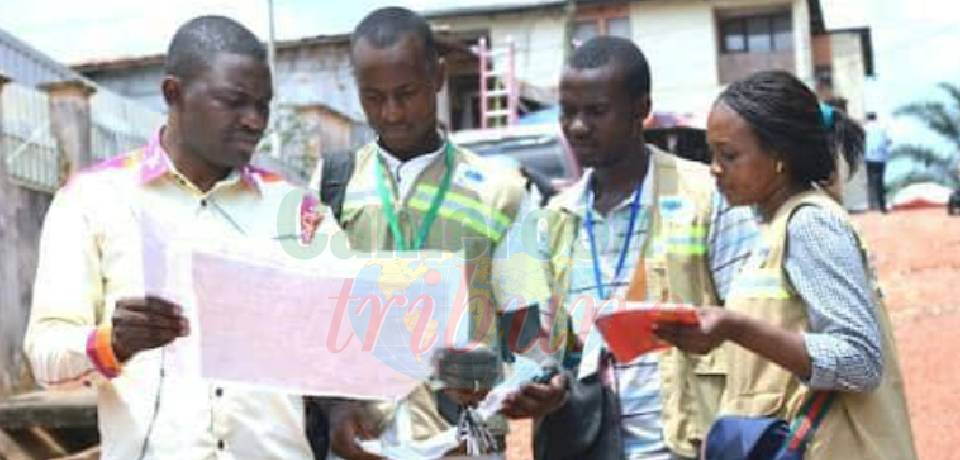
The exercise that began on April 24, 2026 finally ended on September 15, 2026 with the physical data collection phase.
The physical data collection phase of Cameroon's 4th General Population and Housing Census, RGPH-4 - conducted for the first time in conjunction with the core module of the General Census of Agriculture and Livestock, RGAE - officially came to a close on Tuesday September 15, 2026. The headcount was executed under the statutory authority of the Central Bureau for Censuses and Population Studies, BUCREP. And under the Ministry of Economy, Planning and Regional Development, MINEPAT. The nationwide operation marks a critical step toward updating Cameroon’s demographic and agropastoral data.
Prime Ministerial Extensions
Initially launched nationwide on April 24, 2026, field enumerations were originally scheduled to wrap up within five weeks, ending on May 29, 2026. However, widespread operational hurdles
slowed down coverage. The hurdles included delayed per-diem disbursements to field enumerators, localized logistical friction, reluctant household participation in dense urban zones, and physical access constraints in remote and security-sensitive areas. To salvage data integrity and ensure universal national coverage, Prime Minister, Head of Government, Joseph Dion Ngute, signed a series of extensions:
First Extension: Issued on May 29, 2026, this directive extended counting operations through July 31, 2026. During this period, the Census Technical Committee deployed emergency funds to settle outstanding per-diems for field agents, upgraded health insurance coverage for enumerators in high-risk zones. And incorporated high-resolution satellite mapping to locate unrecorded rural settlements.
Second, Final Extension: On July 31, 2026, Prime Minister Dion Ngute signed a second decree extending field operations by an additional 46 days to September 15, 2026. This supplementary window focused on catching uncounted households in urban centers and completing complex agricultural and livestock data collection in rural farming basins. Divisional authorities (Senior Divisional Officers, SDOs and Divisional Officers, DOs) alongside traditional rulers, were mandated to escort enumerators into hard-to-reach zones.
Institutional Data, Financial Context
The 4th General Population and Housing Census, RGPH-4 was undertaken by the Central Bureau for Censuses and Population Studies, BUCREP. Which deployed over 33,000 enumerators and field supervisors in all 10 regions equipped with encrypted, GPS-enabled mobile tablets for direct real-time data transmission. BUCREP operated a dedicated toll-free helpline (8585) throughout the exercise to field household inquiries and verify agent identities.
The last official census completed by BUCREP in November 2005 recorded Cameroon's population at 17,463,836 inhabitants. The 2026 census results will replace over two decades of projections. With field operations now closed, BUCREP moves into the Post-Enumeration Survey, PES and digital data aggregation phase. Preliminary results are expected within five months.
Comparative Overview
Evaluating the 4th General Population and Housing Census (RGPH-4) against the previous 3rd Census (RGPH-3) reveals significant technological and operational evolution. While RGPH-3 was conducted in November 2005 and established a baseline count of 17,463,836 inhabitants, RGPH-4 took place between April and September 2026.
Final Figures In Five Months
Prior to the execution of RGPH-4, national demographic projections from the Central Bureau for Censuses and Population Studies, BUCREP placed Cameroon's total estimated population at over 28.8 million people. The official consolidated figure of total individuals counted in RGPH-4 will be established once BUCREP completes the processing of data collected during field operations. Which is targeted for publication within approximately five months.
Broader Scope
The scope of the exercise also transformed substantially. RGPH-3 was strictly a standalone demographic and housing count. Whereas RGPH-4 functioned as a coupled census, integrating the General Census of Agriculture and Livestock, RGAE into the core demographic operation.
Computerized Model
From a technological perspective, the 2005 census relied heavily on paper-based questionnaires that required manual processing and physical scanning. This led to a publication delay of over four years before official results were released in April 2010. In contrast, RGPH-4 adopted a fully digital Computer-Assisted Personal Interviewing, CAPI model, deploying encry...
Cet article complet est réservé aux abonnés
Déjà abonné ? Identifiez-vous >
Accédez en illimité à Cameroon Tribune Digital à partir de 26250 FCFA
Je M'abonne1 minute suffit pour vous abonner à Cameroon Tribune Digital !

- Votre numéro spécial cameroon-tribune en version numérique
- Des encarts
- Des appels d'offres exclusives
- D'avant-première (accès 24h avant la publication)
- Des éditions consultables sur tous supports (smartphone, tablettes, PC)


Reactions
De la meme catégorie

Affaire Martinez Zogo: Le 36e témoin entre en scène
- 27 Oct 2026 10:04
- 0 likes
Cameroon Medical Council: Newly Elected Pledges to Restore Dignity
- 27 Oct 2026 10:03
- 0 likes





Commentaires