
Liquefied Petroleum Gas: The Next Frontier For Africa’s Downstream Energy Sector
- Par Kimeng Hilton
- 05 Nov 2026 12:53
- 0 Likes

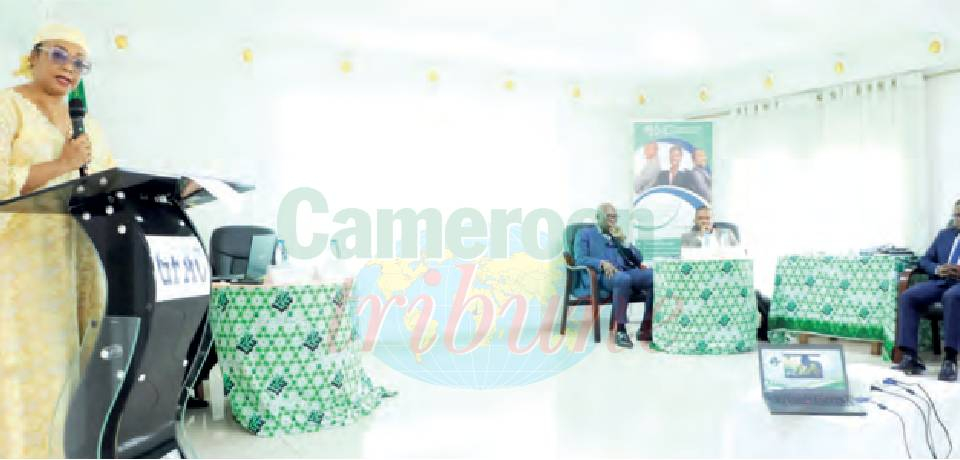
The Third African Refiners and Distributors Association, ARDA Liquefied Petroleum Gas (LPG) Forum holds in Dar es Salaam, Tanzania from November 24-25, 2026.
For decades, refining capacity dominated the narrative surrounding Africa’s downstream energy landscape. However, a transformative shift is underway. Liquefied Petroleum Gas (LPG) has emerged as the continent’s fastest-growing petroleum product and the primary engine for clean cooking access.
Meanwhile, industry leaders, policymakers, developers, and financiers will gather at the Third African Refiners and Distributors Association, ARDA Liquefied Petroleum Gas, LPG Forum in Dar es Salaam, Tanzania from November 24-25, 2026. The theme will be "Unlocking Africa’s LPG Potential: A Catalyst for Industrialisation, Energy Security and an Inclusive Energy Transition." And the objective is to finalize partnerships and drive investments forward.
The Human Cost
According to Anibor O. Kragha, the Executive Secretary of the African Refiners and Distributors Association, ARDA, the urgency of scaling LPG infrastructure stems directly from a major human crisis. Today, nearly one billion Africans rely on firewood and charcoal for daily cooking needs. Household air pollution resulting from these dirty fuels claims approximately 815,000 lives across the continent every year.
Clean Cooking Imperative
The scale of the deficit remains staggering. Between 2022 and 2023, Sub-Saharan Africa’s population expanded by 30 million people, yet only 11 million individuals gained access to clean cooking fuels over that same period. Moving forward, Africa’s economic growth will be defined not merely by resource abundance, but by who invests first in the critical infrastructure that connects gas supply to household demand.
Hampered By Infrastructure Bottlenecks
While LPG accounts for 76 percent of all individuals gaining clean cooking access in Sub-Saharan Africa, regional consumption patterns reveal stark disparities. In 2025, Sub-Saharan Africa consumed 6.4 million tonnes of LPG - equating to just 4.8 kilograms per person. In sharp contrast, North Africa consumes over 50 kilograms per person annually, Anibor notes.
Despite these severe infrastructure limits, market demand grew by 12 percent last year alone. CITAC Africa forecasts that regional demand will nearly triple to 17 million tonnes by 2045. Demographic trends reinforce this trajectory, as one in four people globally will reside in Africa by 2050.
Underbuilt Supply Chain
Despite guaranteed demand growth, Anibor argues, the supply chain remains dangerously underbuilt. Although the United States serves as Africa’s largest LPG supplier, no sub-Saharan terminal is currently capable of discharging a full Very Large Gas Carrier (VLGC) cargo of approximately 45,000 tonnes. Only about 20 storage facilities across the entire continent hold 10,000 tonnes or more, with stock levels frequently covering just 10 days of demand or less.
Most African buyers rely on small, expensive spot-market cargoes rather than long-term, price-predictable contracts. When global disruptions occur - such as the 2026 Strait of Hormuz closure that triggered a 70 to 100 percent price spike in East and West Africa - doubled refill costs force households straight back to charcoal.
From Gas Processing To Last-Mile Delivery
Clean cooking can only scale as fast as the physical fuel supply chain. Addressing this gap requires targeted capital across five essential links of the value chain. According to Kragha, by keeping more African-produced LPG on the continent, even as roughly 10 million tonnes are currently exported annually.
Building VLGC-capable terminals and strategic bulk storage to enable long-term supply contracts. Expanding local cylinder manufacturing and bottling capacity to drive down hardware costs for households. Strengthening transport networks to connect coastal ports with landlocked internal markets. Expanding cylinder recirculation systems, micro-cylinders (3 to 6 kg), and pay-as-you-go technology.
Huge Investments Required
According to the International Energy Agency (IEA), achieving universal clean cooking access across Africa will require roughly $2 billion in annual investment through 2040 - representing less than 0.1 percent of global annual energy investments. Capital is available; the primary challenge lies in structuring bankable projects that finance the entire supply chain rather than focusing solely on stove distribution.
The Regional-Hub Consortium Model
Building continent-wide LPG infrastructure requires collaborative investment frameworks that leverage the unique strengths of various international and domestic players. US producers bring critical supply security through 12-to-24-month formula-priced contracts, securing long-term demand in a rapidly expanding market. International traders such as Petredec, Vitol, and Trafigura contribute advanced shipping logistics, balance sheets, and risk management capabilities, allowing them to capture prime port positions across multi-country networks.
At the same time, Kragha notes, Gulf partners - including national oil companies and trade financiers backed by initiatives like Saudi Arabia’s Forward7 and IGNITE - provide essential infrastructure and cargo capital to expand their downstream footprint. Chinese investors, following recent Memorandums of Understanding with NNPC, are stepping in with engineering expertise, refining equity, and cylinder manufacturing power to foster industrial integration.
Contributions Of Local Firms
On the ground, African National Oil Companies contribute port land, concessions, domestic gas allocations, and host-country support to enhance national energy security and reduce gas flaring. Finally, established African marketers such as Oryx Energies, Sahara, Ardova, and Rainoil leverage deep local market knowledge to manage inland routes and deliver commercial returns on last-mile retail investments.
To bring these diverse interests together, ARDA advocates for a regional-hub consortium model. This structure brings an international trader on as operator, anchors the project with US supply contracts, utilizes an African NOC as host, secures capital from Gulf or multilateral development financiers, and relies on local African marketers to handle last-mile distribution.
Anchor Markets, Corridor Hubs, Frontiers
Investment opportunities span three distinct geographical profiles across the continent:
Anchor Markets: Nigeria, Côte d’Ivoire, South Africa, and Angola account for over half of all sub-Saharan LPG demand. Nigeria is targeting 5 million tonnes annually by 2030, shifting its focus toward gas processing and storage as domestic refining expands. South Africa is currently adding a 30,000-tonne terminal at Durban paired with a rail link to Gauteng, while Angola’s modern terminal at Barra do Dande positions it to serve as a key regional exporter.
Cet article complet est réservé aux abonnés
Déjà abonné ? Identifiez-vous >
Accédez en illimité à Cameroon Tribune Digital à partir de 26250 FCFA
Je M'abonne1 minute suffit pour vous abonner à Cameroon Tribune Digital !
- Votre numéro spécial cameroon-tribune en version numérique
- Des encarts
- Des appels d'offres exclusives
- D'avant-première (accès 24h avant la publication)
- Des éditions consultables sur tous supports (smartphone, tablettes, PC)





Commentaires