

Enhancing Semi-mechanised Artisanal Mining: Prime Minister Instructs Collaboration
Below is a press release from the Prime Minister’s Office following the cabinet meeting of yesterday May 21, 2026.
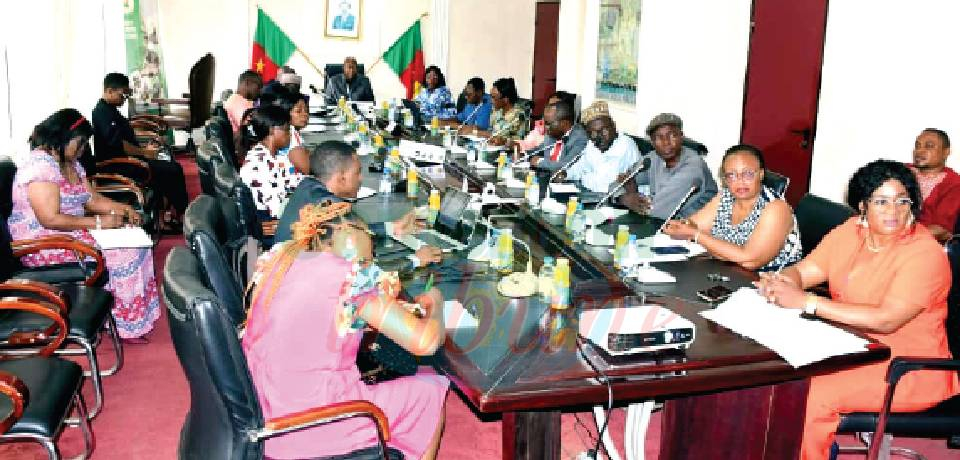
« The Prime Minister and Head of Government, His Excellency Joseph Dion Ngute, chaired a Cabinet Meeting on Thursday, 21 May 2026 at 10 a.m. in the auditorium of his office, attended by Ministers of State, Ministers, Deputy Ministers and Secretaries of State. The following items featured on the agenda : I. Statement by the Minister of Labour and Social Security on "institutional mechanisms for protecting the rights ofworkers exposed to abuse by employers » ; 2. Statement by the Minister of the Environment, Nature Protection and Sustainable Development on"the environmental impact ofthe system to restore and rehabilitate mining sites » ; 3. Statement by the Minister of Mines, Industry and Technological Development on "measures taken to counterfraud and regulate artisanal mining in Cameroon » ; 4. Other matters. Speaking after the opening address of the Head of Government, the Minister of Labour and Social Security recalled that the protection of workers in Cameroon is governed by Law No. 92/007 of 14 August 1992 instituting the Labour Code. He underscored the link between the rights guaranteed to workers under their employment contracts and the abuses perpetrated by certain employers, particularly with regard to remuneration, through delayed salary payments and unlawful deductions. The Minister further drew attention to a number of violations of labour and social security legislation, notably the failure to register employees with the National Social Insurance Fund (NSIF) and the non-remittance of social security contributions despite their deduction from workers' earnings, thereby depriving employees and their families ofthe benefits to which they are entitled. He also highlighted other recurrent infringements, including excessive working hours, unhealthy and unsafe working conditions, the denial of statutory leave entitlements, non-compliance with applicable collective bargaining agreements, and the absence of adequate medical coverage. To remedy these shortcomings, the Minister stressed that the protection of workers is founded primarily on a preventive approach, with the Labour Inspectorate playing a central role through the provision of guidance, the mediation of labour disputes, and the conduct of workplace inspections. Where employers persist in non-compliance, Labour Inspectors are empowered to initiate proceedings before the competent courts with a view to securing the application of the sanctions prescribed by law. By way of illustration, more than 1,700 inspections were conducted across enterprises during the first quarter of 2026, leading to the issuance of 188 formal notices to defaulting employers. The Minister further underscored the important role of staff representatives in bringing workers' grievances to the attention of management, while highlighting the continued efforts of the National Social Insurance Fund (NSIF) to promote awareness and provide support to employers and employees alike in matters relating to social protection. The Minister further noted that, beyond abuses arising from breaches of social legislation—which may give rise to claims for compensation before the civil courts— the criminal courts also play a pivotal role in addressing acts that constitute violations of human dignity and degrading treatment in the workplace. In this regard, he called upon all victims of such unacceptable practices to report them without delay to the competent authorities through the dedicated hotline (222 23 00 04) or via the email address cabinetmintssû)yahoo.fr in order to ensure that appropriate legal action is taken against the perpetrators. Taking the floor thereafter, the Minister of the Environment, Nature Protection and Sustainable Development recalled that the environmental dimensions of mining activities in Cameroon are governed by a dual legal framework comprising, on the one hand, Law No. 96/12 of 5 August 1996 relating to environmental management and, on the other hand, Law No. 2023/014 of 19 December 2023 establishing the Mining Code. He explained that the rehabilitation of mining sites, envisaged from the very inception of mining projects through a rigorous planning process, is intended to restore affected areas in a manner that guarantees environmental stability, safeguards public safety, and promotes the sustainable post-mining use of land. This approach rests on three fundamental pillars: first, the prior conduct of an Environmental and Social Impact Assessment or the preparation ofan environmental impact report, undertaken with the involvement of relevant technical administrations, civil society organisations and local communities; second, the effective implementation of the measures prescribed in the Environmental and Social Management Plan; and third, the continuous environmental monitoring and oversight exercised by the competent authorities throughout the lifecycle of the project. In this regard, former mining sites and quarries are required to be rehabilitated to a condition that ensures long-term stability and safety, restores their agricultural, forestry and pastoral potential, and reestablishes a landscape that closely reflects its original state or is compatible with sustainable alternative uses. The Minister further reiterated that operators who fail to fulfil their environmental obligations are liable to sanctions, in keeping with the "polluter pays" principle. He further emphasised that, once it has been duly established that a mining site has been restored in accordance with the prescribed environmental standards, an environmental discharge certificate may be issued to the operator. Such certification, however, does not absolve the operator of responsibility for any environmental damage subsequently identified as arising from its past activities. The Minister concluded by drawing attention to the existence of the Fund for the Restoration, Rehabilitation and Closure of Mining Sites, which is financed through annual contributions paid by holders of mining titles and authorisations for the exploitation of mineral resources. As part of this sovereign responsibility, 57 environmental compliance certificates were issued between 2020 and 2026 for mining and quarrying projects, following the advice of the Interministerial Committee on the Environment. However, the Minister lamented the persistent tendency of certain operators to evade their legal and regulatory obligations regarding the environment, thereby highlighting several challenges that must be add...
Cet article complet est réservé aux abonnés
Déjà abonné ? Identifiez-vous >
Accédez en illimité à Cameroon Tribune Digital à partir de 26250 FCFA
Je M'abonne1 minute suffit pour vous abonner à Cameroon Tribune Digital !

- Votre numéro spécial cameroon-tribune en version numérique
- Des encarts
- Des appels d'offres exclusives
- D'avant-première (accès 24h avant la publication)
- Des éditions consultables sur tous supports (smartphone, tablettes, PC)







Commentaires