

Economy: Liberalization, Import-Substitution Era
- Par Roland MBONTEH
- 06 Nov 2026 08:09
- Likes
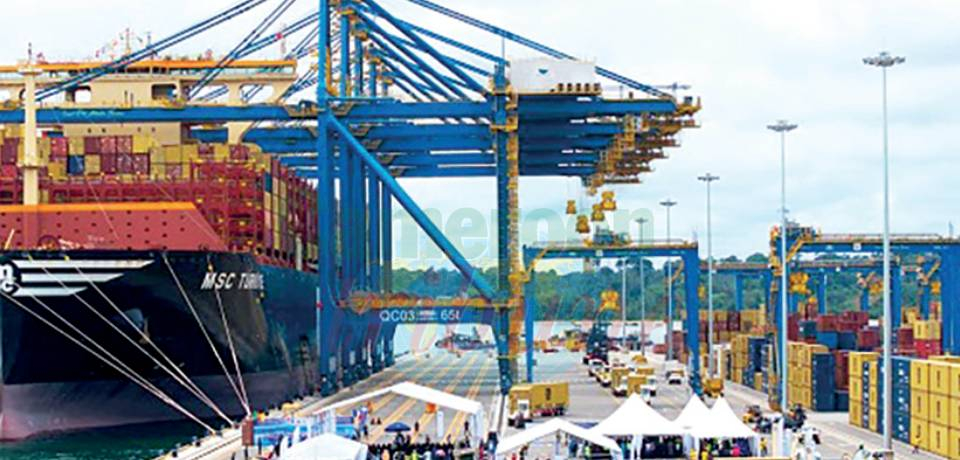
The 44-year reign of President Paul Biya has been marked by far reaching economic reforms and great strides in infrastructural development though challenges abound.
A s Cameroonians celebrate another November 6 and its hero, Presi dent Paul Biya, at the helm of the Supreme Magistracy of the State, achievements of the New Deal in the economic domain are glaring with to wering infrastructural development and sturdy reforms. In fact, the 44 years of President Paul Biya’s stewardship have been characterized by mixed fortunes; on the one hand, economic policies that yiel ded palpable dividends and global economic crisis which has had a crunch on the Ca meroonian economy. Key Reforms President Paul Biya since 1994, adopted the liberalization and market economy po licy, bringing to fore key economic reforms which moved the economy forward. As concerns trade, the end of marketing boards ushered in the freedom to import and export. Prices were also liberalized except for fuel and essential basic goods. Some State-owned companies were pri vatized while private commercial banks were allowed to enter the market. Go vernment also encouraged private invest ments with the adoption of the 2002 In vestment Charter, creation of CFCE which later morphed into the Investment Pro motion Agency. This era was also marked by significant liberation in sectors like te lecommunications, media, higher education, amongst others. The mobile telephony sector for example, witnessed the entry of telecoms companies like MTN and Orange. With the reforms summarized in Vision 2035 A Liberal Economy with a Strategic State, diversification, private sec tor boom, mobile and banking penetration pushed growth. Prior to this period, Presi dent Biya was able to sail the murky waters of difficult economic crisis. He adopted the Structural Adjustment Pro gramme imposed by the IMF and the World Bank. This ushered in privatization to re duce the heavy burden of over State in volvement in the economy through State enterprises and establishments. These re forms were contained in the Growth and Employment Strategy Paper which was the first economic blueprint which geared towards Vision 2035. Import-Substitution Following a widened gap of trade deficit peaking at FCFA 4,000 billion of imports per year, with food import alone spiking to about FCFA 800 billion a year, the go vernment through the National Develop ment Strategy 2020-2030 (SND30) adop ted a policy to drive local production of certain value chains in order to reduce imports. Rice, wheat, maize, milk, palm oil, fish etc which consumed a huge chunk of money through importations were ear marked. The Import-substitution policy which aims at producing what we consume and consuming what we produce, is thus the operational arm of SND30. It targets to reduce imports by 40-50 per cent. Since its implementation, the government has allocated colossal sums to support the import-substitution plan. FCFA 248 billion, FCFA 511.6 billion and FCFA 611.4 billion were consecrated for import-substitution in 2024,2...
Cet article complet est réservé aux abonnés
Déjà abonné ? Identifiez-vous >
Accédez en illimité à Cameroon Tribune Digital à partir de 26250 FCFA
Je M'abonne1 minute suffit pour vous abonner à Cameroon Tribune Digital !

- Votre numéro spécial cameroon-tribune en version numérique
- Des encarts
- Des appels d'offres exclusives
- D'avant-première (accès 24h avant la publication)
- Des éditions consultables sur tous supports (smartphone, tablettes, PC)









Commentaires