

Massacre In The Congo Basin: 660kg Of Pangolin Scales Seized In Major Yokadouma Sting
- Par Kimeng Hilton
- 06 May 2026 16:35
- 0 Likes
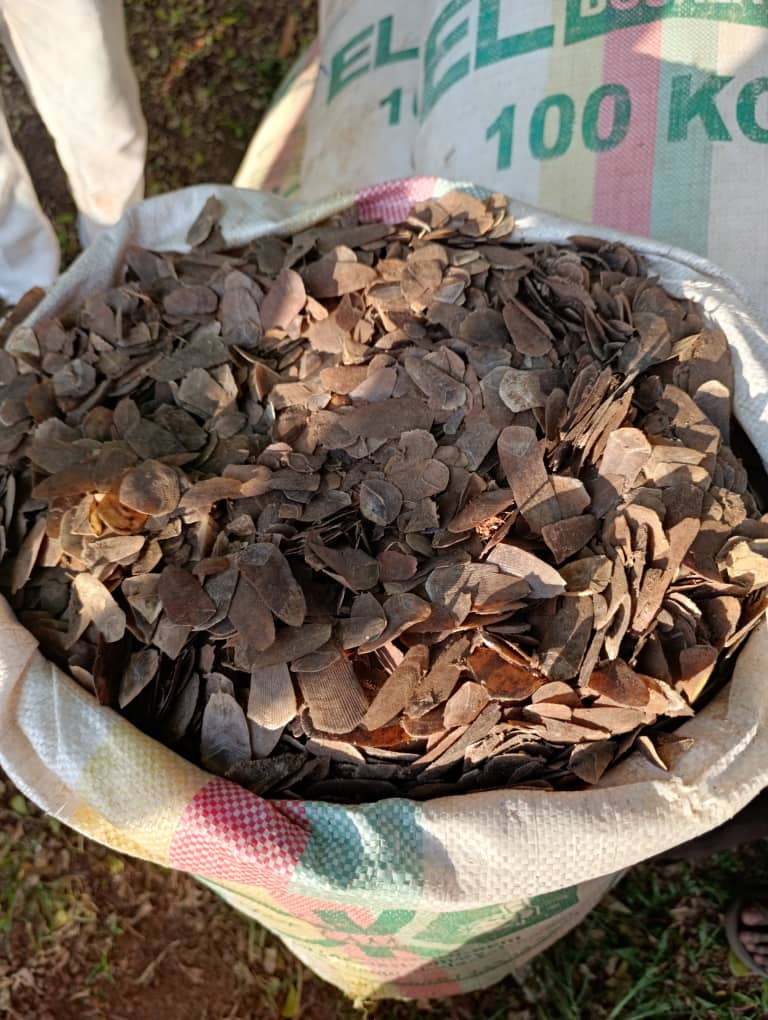
Experts say the seized sacks of scales represent over 1,300 pangolins poached. For now, three suspects are in custody.
In the quiet afternoon heat of Tuesday, May 5, 2026, the silence of a carpentry workshop in the center of Yokadouma in Boumba-Ngoko Division of East Region was shattered. What appeared to be a routine delivery of goods via motorcycle was, in reality, the final stage of a weeks-long intelligence operation targeting one of the division’s most prolific wildlife trafficking networks.
Joint, Coordinated Operation
At approximately 4:30 PM, a strike team comprising officials of the Boumba-Ngoko Divisional Delegation of Forestry and Wildlife, MINFOF, rangers and officials of the international charity, the Last Great Ape Organization, LAGA, descended upon the site. The result was a staggering blow to the illegal wildlife trade: the arrest of three suspects and the recovery of 660 kilogrammes of pangolin scales.
The logistics of the operation were surgical. The suspects had arrived on three motorcycles, heavily laden with sacks. As they began offloading the cargo into a warehouse disguised within the carpentry premises, the joint task force moved in. While the suspects initially attempted to conceal the nature of their cargo, the presence of 12 bulging sacks - already added to a stash previously stored in the warehouse - left no room for denial.
1,320 Pangolins Poached
The weight of the seizure - 660 kg - is difficult for the average citizen to visualize until it is translated into biological loss. Wildlife experts attached to the Ministry of Forestry and Wildlife (MINFOF) estimate that this haul represents the slaughter of at least 1,320 pangolins.
"It is a true ecological carnage," stated David Engoulou, Head of the Wildlife Section at the MINFOF Divisional Delegation for Boumba-Ngoko, during a brief pause in the interrogation of the suspects.
Fully Protected Species
The pangolin, often described as the world’s most trafficked mammal, is a "Class A" species in Cameroon. This status is not merely a bureaucratic label; it signifies an animal that is "fully protected," placing it on the same legal and conservation footing as the forest elephant or the Western Lowland Gorilla.
Beyond their intrinsic value, pangolins serve as the "gardeners of the forest," acting as natural regulators of ant and termite populations. Their removal on this scale creates a vacuum that can lead to significant imbalances in the forest ecosystem of the Congo Basin.
Role Of LAGA, Community Vigilance
This was not a chance encounter. The success of the May 5, 2026 operation was the culmination of a sophisticated intelligence-gathering phase. For weeks, community vigilance committees - local citizens weary of the exploitation of their natural heritage - provided "raw" intelligence to the authorities.
The NGO LAGA, known for its expertise in undercover investigations and legal follow-up, provided the technical support necessary to turn these tips into actionable evidence. Following a period of intense surveillance and "filature" (shadowing) of the suspects, the task force waited for the exact moment when the illicit goods were most vulnerable: the point of consolidation.
By catching the suspects during the offloading process, the authorities secured "flagrante delicto" (red-handed) evidence, which is crucial for successful prosecution in Cameroon’s judicial system.
The Three Suspects
The three individuals currently in custody in the Yokadouma Gendarmerie Company are Cameroonians in their thirties and forties. While their specific roles - whether they are primary poachers or mid-level consolidators - are still being determined through ongoing hearings, the volume of the cargo suggests a well-funded operation.
"We cannot reveal the sources of our information or the full details of the suspects’ statements yet," noted David Engoulou. "The investigation is ongoing, and we are working to determine if there are higher-level 'big fish' who financed this shipment."
Local reports from Guy Simplice Sombes of Boumba FM Yokadouma suggest that the use of motorcycles is a common tactic for traffickers in the East Region. Allowing for rapid movement through forest tracks that larger vehicles cannot navigate, thereby bypassing traditional road checkpoints.
The New 2024 Forestry Law
The suspects arrested on Tuesday, May 5, 2026 face a significantly harsher legal landscape than those caught just two years ago. During the interrogation process, officials highlighted a critical shift in Cameroon’s penal framework.
Under the previous 1994 legislation, wildlife crimes often resulted in sentences that conservationists argued were "mere slaps on the wrist" - often 5 to 10 years at maximum, with fines that paled in comparison to the black-market value of the goods.
However, according to Section Head David Engoulou, the 2024 Forestry Law has dramatically increased the stakes.
Heavier Sentences, Fines
Prison sentences now range from 15 to 20 years for the most severe Class A violations. And the fines have skyrocketed to between 20 million and 50 million CFA Francs.
This legislative shift reflects the Government’s "Very High Impulsion" to treat wildlife trafficking not just as an environmental issue, but as a matter of national security and organized crime. The suspects will soon be brought before the Public Prosecutor at the High Court of Yokadouma, where these new penalties will be put to the test.
Why The Pangolin?
The demand driving the "carnage" in Boumba-Ngoko Division originates thousands of miles away. Pangolin scales are highly sought after in traditional medicine markets in Asia, despite a lack of scientific evidence regarding their medicinal properties.
In the Congo Basin, the "Giant Pangolin" and the "White-bellied Pangolin" are the primary targets. As populations in Asia have been hunted to near-extinction, international criminal syndicates have turned their sights on the dense forests of East Cameroon. The 660 kg seized this week was almost certainly destined for an international port, likely Douala or Kribi, for export.
Call For Continued Vigilance
Aladji Halla, the Boumba-Ngoko Divisional Delegate for Forestry and Wildlife, praised the "exemplary collaboration" between...
Cet article complet est réservé aux abonnés
Déjà abonné ? Identifiez-vous >
Accédez en illimité à Cameroon Tribune Digital à partir de 26250 FCFA
Je M'abonne1 minute suffit pour vous abonner à Cameroon Tribune Digital !

- Votre numéro spécial cameroon-tribune en version numérique
- Des encarts
- Des appels d'offres exclusives
- D'avant-première (accès 24h avant la publication)
- Des éditions consultables sur tous supports (smartphone, tablettes, PC)


Reactions
De la meme catégorie

Affaire Martinez Zogo: Le 36e témoin entre en scène
- 27 Oct 2026 10:04
- 0 likes
Cameroon Medical Council: Newly Elected Pledges to Restore Dignity
- 27 Oct 2026 10:03
- 0 likes





Commentaires