

From Olive Mount To Heavenly Throne: Cameroon Celebrates The Triumph Of Ascension Day
- Par Kimeng Hilton
- 14 May 2026 15:02
- 0 Likes
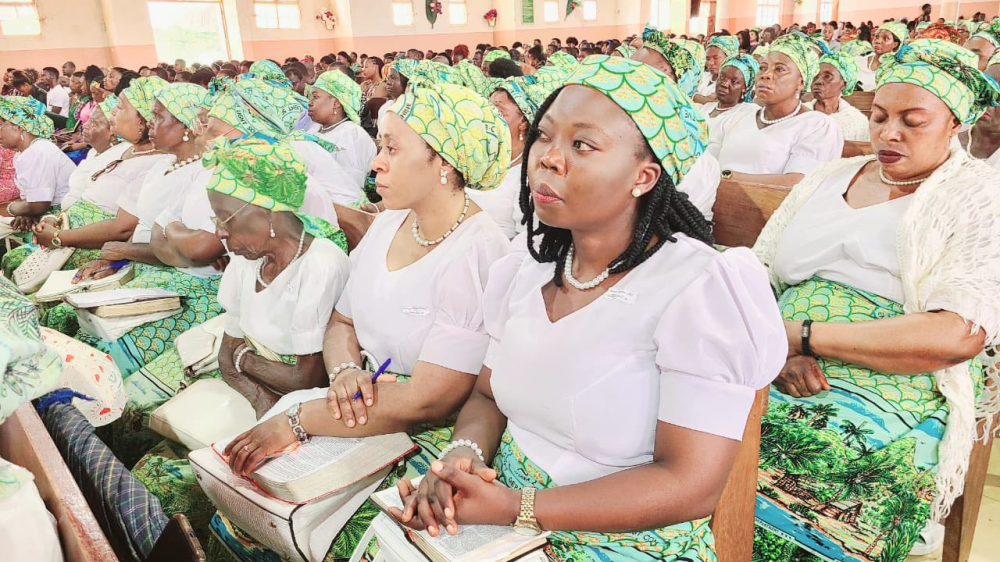
Observed through church services and moments of prayers and deep meditation, the day marked this May 14, 2026 remembers Jesus’ physical return to heaven. Forty days after his resurrection.
On May 14, 2026, the streets of Cameroon fell into a reverent quiet as the nation paused to observe Ascension Day. A significant pillar of the Christian calendar and a national public holiday, the day marks the biblical account of Jesus Christ’s bodily return to heaven 40 days after his resurrection.
From the bustling capital of Yaoundé to the misty hills of Bamenda, the day was defined by a blend of high-church liturgy, meditative services, and powerful sermons emphasizing Christ’s transition from earthly ministry to heavenly authority. Across denominations, the message was clear: the Ascension is not merely a historical footnote or a "ghostly disappearance," but a pivotal coronation that guarantees the future of the Christian faith.
The Theology Of The Return
Rev. Dr. Rudolf Banglis, Senior Pastor of Faith Baptist Church, Anguissa, Yaounde, addressed a packed congregation on the "Rationale And Significance" of the feast. He challenged the notion of the Ascension as a myth, grounding it in the physical reality described in the Books of Luke and Acts.
"The Ascension Day is the day Jesus Christ ascended to heaven spirit, soul, and body in full view of the disciples on the Mount of Olives," Dr. Banglis stated. He outlined a four-fold significance for the modern believer, noting that the event provides "living hope" for the Second Coming. Inaugurates the age of the Holy Spirit, and grants Jesus access to the "position of power and authority at the right hand of God the Father."
Dr. Banglis emphasized that without the Ascension, there would be no Pentecost. "No Ascension, no Pentecost, and no missions," he declared, linking Christ’s departure directly to the empowerment of the global Church.
The High Priest In The Heavenly Court
In the Northwest Region, despite the ongoing challenges facing the area, Rev. Pastor Kengwa Godfrey of the Presbyterian Church in Cameroon, PCC Alamatu Congregation, Bamenda, provided a scholarly and comforting breakdown of the event. He described the Ascension as one of the great "Ecumenical feasts," ranking alongside the Passion and Pentecost.
According to Rev. Godfrey, the departure of Christ marked the "initiation of intercessory work." "In heaven, Jesus functions as the High Priest and Mediator, representing humanity before God," he explained. He further noted that the celebration involves specific liturgical traditions, such as the extinguishing of the Paschal Candle, symbolizing Christ’s physical presence leaving the earth to take up his role as the "King of the Universe."
For the congregants in Bamenda, the message of Christ’s "victory over death and exaltation" served as a much-needed reminder of a higher authority presiding over earthly struggles.
Redefining The Kingdom
Perhaps the most nuanced exploration of the day came from Rev. Joseph Ngwani of Rehoboth Baptist Church in Nkolbisson, Yaoundé. In a detailed worship message, Rev. Ngwani focused on the "interim" period - the 40 days between the Resurrection and the Ascension.
He noted that the disciples, still thinking in earthly terms, asked Jesus: "Lord, will you at this time restore the Kingdom to Israel?"
"This was a legitimate question," Rev. Ngwani argued, "but the way the restoration of the kingdom is going to come is not the way the disciples expected." He explained that Jesus’ response redirected their focus from a physical, political kingdom in Jerusalem to a spiritual expansion through the power of the Holy Spirit.
"The restoration of the kingdom is going to be through the power of the Holy Spirit... through faithful witnesses of the resurrection," Ngwani said. He reminded his listeners that Jesus did not disappear like a ghost, but "ascended into a place - into glory," where he now sits as a completed redeemer.
Courage In Times Of "Chaos"
Adding a pastoral blessing to the national observance, Bishop Michael Bibi of Buea issued a message to the "People of God," urging them to use the Solemnity of the Ascension to rise above the doldrums of daily life.
"We are invited to lift our hearts above fear, division, and discouragement," the Bishop wrote. He emphasized that the Ascension was not an act of abandonment, but a strategy of empowerment. "Christ did not abandon His people, but ascended into Heaven to prepare a place for us and to strengthen us through the gift of the Holy Spirit."
The Bishop’s words resonated deeply in a national context often marred by separatist violence and the growing incidence of abductions for ransom, calling on Cameroonians to become "faithful witnesses" through lives of prayer, love, and service.
The Three-Fold Hope
As the services concluded, the recurring theme across the nation’s pulpits was the current activity of the ascended Christ. Rev. Ngwani summarized the hope of the believer in three points: Christ is currently sitting in power; his seat signifies that the work of redemption is "fully accomplished." And, he is actively pleading for his followers. "If there is any hope for us here in this chaos," Rev. Ngwani concluded, "it is because the ascended Jesus is seated at the right hand of the Father, interceding for you."
Next Spiritual Milestone
As the public holiday draws to a close, the Christian community in Cameroon looks forward to the next major milestone: Pentecost, celebrated 10 days from today to mark the arrival of the Holy Spirit that the Ascension made possible. For now, the "Men of Galilee" (and Cameroon) have been told...
Cet article complet est réservé aux abonnés
Déjà abonné ? Identifiez-vous >
Accédez en illimité à Cameroon Tribune Digital à partir de 26250 FCFA
Je M'abonne1 minute suffit pour vous abonner à Cameroon Tribune Digital !

- Votre numéro spécial cameroon-tribune en version numérique
- Des encarts
- Des appels d'offres exclusives
- D'avant-première (accès 24h avant la publication)
- Des éditions consultables sur tous supports (smartphone, tablettes, PC)


Reactions
De la meme catégorie

Affaire Martinez Zogo: Le 36e témoin entre en scène
- 27 Oct 2026 10:04
- 0 likes
Cameroon Medical Council: Newly Elected Pledges to Restore Dignity
- 27 Oct 2026 10:03
- 0 likes





Commentaires