
Social, Behaviour Change Communication: Cameroon Rolls Out New National Strategy To Up Social Indicators
- Par Kimeng Hilton
- 11 Jun 2026 18:09
- 0 Likes
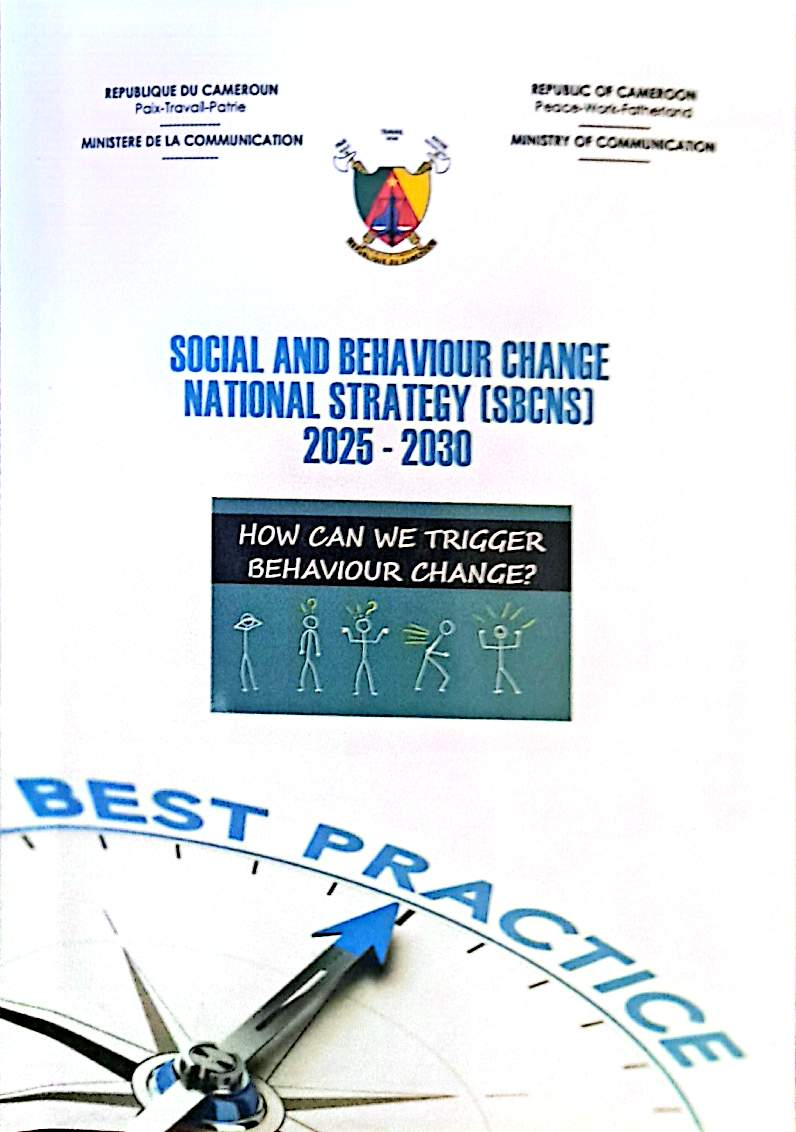
The bilingual document, which runs until 2030, was presented to journalists in Yaounde on June 11, 2026 by the Ministry of Communication. It was produced with the support of UNICEF Cameroon.
In a strategic move to bridge the gap between public awareness and actual social action, the Ministry of Communication, MINCOM, in partnership with the United Nations Children’s Fund, UNICEF, officially launched the dissemination of the National Strategy for Social and Behavioural Change, SBC (2025-2030) on June 11, 2026.
Key Stakeholders Present
The strategy was presented during a high-profile meeting with the media (café média) held in the conference hall of the Economic and Social Council in Yaoundé. The event brought together key sectorial ministries, over a dozen media professionals, national experts, civil society organizations, and international development partners including the UNDP, WHO, and UNESCO.
Critical Shift In Paradigm
The national strategy represents a structural evolution from the traditional Communication for Development (C4D) framework to the more holistic Social and Behavioural Change (SBC) model.
Speaking at the event, Mrs. Suzanne A. Zogo, Director of Internal Public Communication in MINCOM and Project Focal Point, explained that while C4D focused heavily on information dissemination, it often failed to shift deeply rooted habits.
Why The Change
"We asked ourselves: why do people continue to carry out acts contrary to social norms and their own well-being, even when they know these acts are harmful? Communication alone is no longer enough. With SBC, we are integrating anthropology and sociology to uncover the underlying determinants of human behavior," Mrs. Suzanne A. Zogo explained.
Stagnant Development Indicators
The implementation of the strategy arrives at a critical juncture. According to the document's executive summary, Cameroon's essential metrics - including maternal and infant mortality, HIV infection rates among adolescent girls, environmental pollution, road accidents, and chronic malnutrition - have stagnated over the last decade despite rigorous sensitization campaigns.
Strategic Areas, Real-world Applications
The new strategy aligns directly with Cameroon's National Development Strategy (NDS30), focusing on human capital development, well-being, and strategic governance. It is structured around four primary pillars: The realization of rights and access to services; community participation and ownership; capacity development; and governance, strengthening advocacy, and partnership.
Pressing Local Crises
During the interactive sessions, officials urged journalists to move away from generic "copy-paste" reporting and instead anchor the strategy into pressing local crises. Mrs. Zogo highlighted rampant issues like child rape and aggressive driving behavior in urban centers like Yaoundé as prime examples where the guide must be applied.
Echoing this view, Mrs. Abessolo Célestine Virginie, Head of the Cooperation Unit in the Ministry of Social Affairs (MINAS), emphasized the necessity of tailored, inclusive communication.
"It is about having a clear assessment of your regional or social reality where you work. We must ensure the message is inclusive so it positively impacts grassroots populations," said Mrs. Abessolo Célestine Virginie, MINAS SBC Focal Point.
Others Already Practising It
Mrs. Abessolo also pointed to past successes under the previous framework, noting that over 300 indigenous youth across the East and Northern regions are currently maintaining active platforms. To drive indicators on birth registration, vaccination, and WASH (Water, Sanitation, and Hygiene) practices.
Appeal To Media
The workshop concluded with a direct challenge to the media corps: exit comfort zones, engage directly with local communities, and design proactive media plans rather than relying on passive coverage.
With documentary kits distributed and joint recommendations formulated, the Government of Cameroon and UNICEF expect this 2025-2030 roadmap to establish a unified framework. The ultimate goal remains clear: turning information into measurable, life-saving behavior chan...
Cet article complet est réservé aux abonnés
Déjà abonné ? Identifiez-vous >
Accédez en illimité à Cameroon Tribune Digital à partir de 26250 FCFA
Je M'abonne1 minute suffit pour vous abonner à Cameroon Tribune Digital !

- Votre numéro spécial cameroon-tribune en version numérique
- Des encarts
- Des appels d'offres exclusives
- D'avant-première (accès 24h avant la publication)
- Des éditions consultables sur tous supports (smartphone, tablettes, PC)


Reactions
De la meme catégorie

Affaire Martinez Zogo: Le 36e témoin entre en scène
- 27 Oct 2026 10:04
- 0 likes
Cameroon Medical Council: Newly Elected Pledges to Restore Dignity
- 27 Oct 2026 10:03
- 0 likes






Commentaires