

Femicide Crisis In Cameroon: MINPROFF Reports 50 Brutal Murders In First Four Months Of 2026
- Par Kimeng Hilton
- 19 Jun 2026 16:51
- 0 Likes
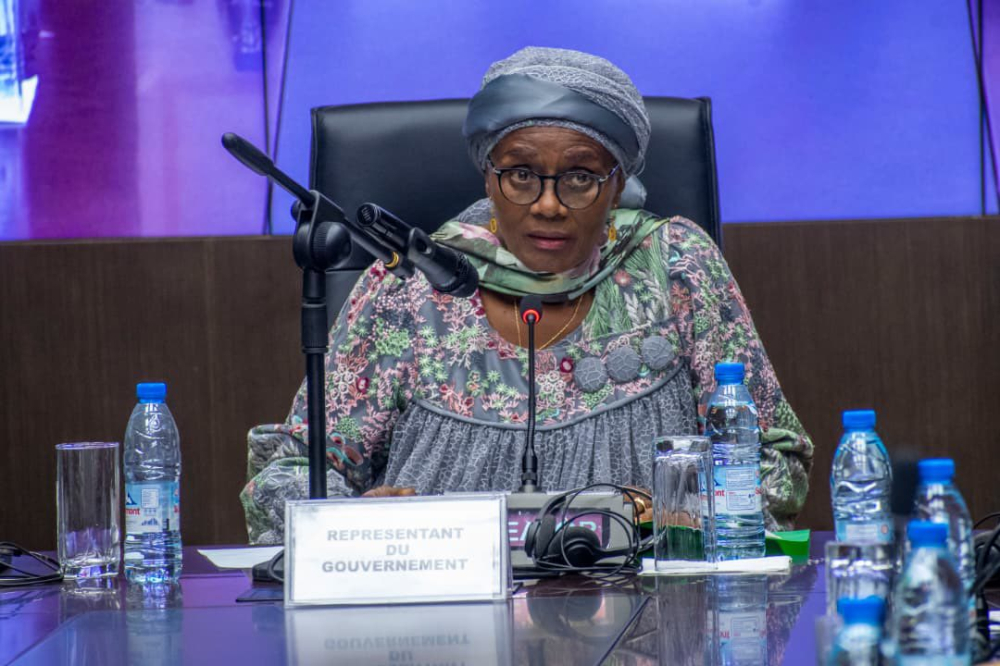
Responding to lawmakers’ questions in the National Assembly on Friday, June 19, 2026, Minister Marie-Thérèse Abena Ondoa said domestic femicide cases have risen by 37% since 2023.
In an ordinary plenary session of the National Assembly in Yaounde on Friday, June 19, 2026, cabinet ministers faced rigorous oversight from lawmakers regarding pressing issues of human security, public safety, and institutional integrity. Highlighting the plenary sitting were aggressive new legal and structural frameworks to curb a disturbing multi-year spike in femicide, the institutionalization of satellite-tracking systems to stop highway mass casualties. And an explicit administrative crackdown on unauthorized fee collections within public health facilities. And the new personnel app for the Public Service, AIGLES.
Femicide, Domestic Violence
Appearing before the House to answer a question from Hon. Toukam Tela Angèle Sandio, the Minister of Women’s Empowerment and the Family, MINPROFF Prof. Marie-Thérèse Abena Ondoa delivered a sobering assessment of Gender-based Violence, GBV in Cameroon. The Minister revealed that between January and April 2026 alone, the State officially recorded 50 cases of femicide across the national territory. Alongside 166 cases of rape, 13 infanticides, 3 kidnappings, and 3 cases of physical child abuse.
Grim Trajectory
The newly released data underscores a grim, unbroken upward trajectory over recent years:
2023: 56 cases officially recorded
2024: 67 cases officially recorded
2025: Approximately 77 cases officially recorded
2026 (Jan–April): 50 cases officially recorded
"These figures represent only the tip of the iceberg," the Minister warned. "We must still deplore the dangerously low rate of reporting for cases of violence. This is driven entirely by the fear of social reprisals, family pressure, and systemic stigmatization by those around the victims."
Signatory To International Conventions
The Minister reminded Parliament that Cameroon is a signatory to major international and regional legal instruments, including the Convention on the Elimination of All Forms of Discrimination against Women (CEDAW) and the Maputo Protocol (the African Charter on Human and Peoples' Rights relating to the Rights of Women in Africa). Alongside domestic statutory protections under Law No. 2016/007 of 12 July 2016 on the Penal Code.
Rising Violence, Though
However, the current baseline data from the Demographic and Health Survey (DHS) shows that 39% of Cameroonian women aged 15–49 have experienced physical violence. And 44% of women in unions have suffered emotional, physical, or sexual abuse from a partner.
State Interventions, Future Frameworks
In response to the crisis, MINPROFF detailed a four-pronged national strategy encompassing prevention, support, repression, and institutional reform:
The Impunity Advocacy Campaign: Launched originally during the International Day of Families at the Hôtel la Falaise, this community-based approach now explicitly targets schools, youth organizations, and traditional leaders.
National Protection Infrastructure: The state has operationalized 45 secure "safe spaces" and women’s cohesion hubs across the country - including within refugee camps - alongside 28 specialized Gender Desks built directly into national police stations and gendarmerie brigades to ensure confidential reporting. A dedicated Child Helpline (116) handles emergency referrals for young girls.
Intersectoral Platforms: All 10 regions now feature fully operational GBV response platforms uniting MINPROFF, MINAS, MINSANTE, MINJUSTICE, the DGSN, and local authorities to harmonize case management tools.
Positive Masculinity and Parenting: Working in alignment with the African Union's high-level presidential initiative, an entire Ambassadors' Club for Positive Masculinity has been integrated with state awareness efforts to engage men and boys.
"Amicable," Out-Of-Court Traditional Settlements”….
Acknowledging institutional weaknesses, the Minister highlighted critical bottlenecks fueling the phenomenon: the persistent local handling of severe domestic violence through "amicable," out-of-court traditional settlements; long judicial delays; and a general mistrust of the justice system. Moving forward, MINPROFF is actively monitoring the finalization of a specific, standalone draft bill against GBV in partnership with the Parliamentary Network for the Promotion of Gender Equality (REPAGE). The ministry is also fast-tracking the upgrade of its national information system and executing preliminary work to launch a formal National Women's Council.
Mandatory Fleet Tracking, Digital Invoicing
Defending the State's aggressive road safety portfolio, the Minister Delegate to the Minister of Transport, Mr. Njoya Zakariaou - speaking on behalf of the substantive minister - addressed a question from Hon. Toukam Tela Angèle Sandio regarding the expansion of the Ym@ne Driver tracking system. Deployed since 2022 via a public-private partnership with the MTN-CAMTRACK Group, the intelligent solution is designed to track interurban passenger and heavy freight transport in real-time.
Over 664,000 Accident Risks Prevented
Minister Delegate Zakariaou presented comprehensive metrics demonstrating the system's capacity to intercept human error (which accounts for 70% of all accidents), vehicular failures (20%), and road environmental risks (10%). During the single year of 2025, the Ym@ne Driver system successfully flagged and mitigated 644,318 traffic risk factors before they could result in fatal collisions.
Risk Mitigation Efforts
The 2025 risk mitigation data presented to Parliament includes:
Speeding Violations: 582,319 cases intercepted via automatic control alerts
Driver Fatigue and Drowsiness: 30,015 instances detected via onboard sensory systems
Seatbelt Non-Compliance: 26,205 cases flagged
Distracted Driving: 1,446 cases recorded
Mobile Phone Interventions: 4,333 cases of phone usage while driving
Toeing The Line
"Members of Parliament will recall when certain prominent transport agencies evoked a constant psychosis of traffic accidents among travelers," Minister Delegate Zakariaou noted. "Today, because of strict adherence to this platform, companies like Touristique Express and Général Express have been elevated into reference models for national road safety."
Enforcement Modifications, Financial Backing
To ensure absolute generalization of the safety system three years into its launch, the Ministry of Transport announced an imminent regulatory overhaul. The state is currently revising the terms of reference and legal codes governing interurban transport licenses. Moving forward, transport operating licenses will be systematically withheld or denied to any company whose buses or cargo trucks are not actively equipped with the government-approved tracking hardware.
To assist transport operators with the financial transition, the Minister Delegate outlined three core incentive mechanisms:
Subsidy Agreements: A secured World Bank financing agreement dedicated to completely equipping more than 5,000 public transport and freight vehicles with the tracking device free of charge.
Rate Reductions: A structural downward revision of commercial installation rates across third-party tracking providers who meet the state's hardware and software compatibility protocols.
Insurance Partnerships: Strategic pacts with national insurance consortiums to subsidize onboard video surveillance assets.
Additionally, the Ministry highlighted its newly deployed intelligent digital video-fine system. Operating as a automated tracking and sanctioning protocol for road violations, the video-fine infrastructure successfully identified and penalized 11,428 traffic violations within a brief ten-day trial window, illustrating the high level of incivility remaining on national highways.
This is supported by an annual budgetary allocation of 300 million CFA francs distributed to Decentralized Local Authorities (RLAs) to finance local road safety equipment and post-accident intervention kits.
Dialysis Transparency, Chronic Disease Burden
Responding to intense joint inquiries regarding public sector extortion, illegal invoicing, and long-term healthcare design, the Minister of Public Health, Dr. Manaouda Malachie, provided definitive clarity on the financial management of chronic kidney disease in Cameroon. The Minister addressed specific grievances raised by Hon. Daniel Etongo Ngalle, Hon. Njume Peter Ambang, and Hon. Rolande Ngo Issi.
15,000 FCFA For Chronic Kidney Disease
Dr. Manaouda directly corrected misconceptions regarding the standard pricing of public hemodialysis care. "I must formally clarify that the regulatory amount due per year from a patient suffering from chronic kidney disease is not 16,000 FCFA, but rather exactly 15,000 FCFA," the Minister stated. He issued an uncompromising warning to hospital administrators, emphasizing that no internal directive authorizes the collection of funds outside official regulatory public revenue protocols, and that every single transaction must be recorded in official accounting ledgers and yield a certified state receipt.
Baseline Clinical Cost
Addressing the widely reported and controversial sums of 100,000 to 250,000 FCFA demanded from kidney patients, Dr. Manaouda explained that these fees do not represent an illicit deposit, an administrative markup, or a hospital scam. Instead, they constitute the baseline clinical cost for the placement of an arteriovenous fistula - a complex, mandatory preliminary surgical procedure required when a patient reaches Stage 4 kidney failure before formal dialysis treatment can even begin. The cost disparity across the country is tied to whether the surgery is performed within a first, second, or third-category state referral hospital.
Report The Abuses!
"Because this specific preliminary procedure, alongside critical companion therapies like erythropoietin injections, are not yet fully subsidized by our current health coverage system, we have initiated an immediate structural review of this funding framework," Dr. Manaouda announced, noting that toll-free numbers and quarterly evaluations are being utilized to catch and sanction rogue hospital personnel misusing the social safety nets enacted by the Head of State.
Double Epidemiological Burden
Concluding his responses, the Health Minister contextualized these individual systemic challenges within Cameroon's wider, ongoing epidemiological transition. The national healthcare system is currently forced to manage a severe "double burden" of disease:
Communicable Disease Threats: Persistent infrastructural pressures from active, dangerous outbreaks of infectious agents, specifically ongoing localized transmissions of Mpox and Ebola virus disease.
Non-Communicable Disease (NCD) Explosion: An exponential, domestic rise in chronic, non-infectious conditions, including cardiovascular diseases, chronic respiratory ailments, advanced diabetes, cancers, and hemoglobinopathies.
According to MINSANTE metrics, NCDs have scaled rapidly to become the leading cause of mortality worldwide, driving nearly 60% of all global deaths and representing 43% of the international disease burden - a trend mirrored heavily in Cameroon's urban centers.
Blame Lifestyle Transformations
Dr. Manaouda attributed this shift to rapid lifestyle transformations, noting that poor dietary habits and increasingly sedentary daily routines serve as the primary preventable drivers behind the onset of chronic organ failures. He called on the National Assembly to mobilize local communities toward early screening programs and state-sponsored health wellness initiatives.
"AIGLES" Software
The National Assembly has welcomed the deployment of the computer application known as "AIGLES" (Gestion Logique des Effectifs et de la Solde / Logical Management of Workforce and Payroll). Initiated by the government, this system locks down the payroll process and puts a definitive stop to the undue payment of bonuses and benefits within the civil service.
Hon. Dniel Ngalle Etongo, a CPDM Member of Parliament for Ndian (South West Region), questioned the head of MINFOPRA: "Could you enlighten us further on this application (AIGLES) and its contribution to reducing corruption within your ministry?"
Major Structural Reform
The Minister of Public Service and Administrative Reform, Joseph LE presented the AIGLES application as a major structural reform, driven by the President of the Republic, Paul Biya, to thoroughly modernize the Cameroonian administration. Designed to replace the legacy SIGIPES and ANTILOPE systems, this platform simultaneously integrates career and payroll management into a single central registry.
To demonstrate the tool's effectiveness, the minister provided a concrete demonstration by revealing civil service statistics updated in real time. Thus, as of the morning of this June 19, 2026, the AIGLES platform precisely displayed 306,159 active public servants and 160,285 pensioners.
...
Cet article complet est réservé aux abonnés
Déjà abonné ? Identifiez-vous >
Accédez en illimité à Cameroon Tribune Digital à partir de 26250 FCFA
Je M'abonne1 minute suffit pour vous abonner à Cameroon Tribune Digital !

- Votre numéro spécial cameroon-tribune en version numérique
- Des encarts
- Des appels d'offres exclusives
- D'avant-première (accès 24h avant la publication)
- Des éditions consultables sur tous supports (smartphone, tablettes, PC)


Reactions
De la meme catégorie

Dialogue communautaire: La force des mots
- 22 Oct 2026 19:47
- 0 likes





Commentaires