

World Humanitarian Day: 2.9 Million People In Need, Only 26% Funded
- Par Kimeng Hilton
- 19 Aug 2026 16:52
- 0 Likes
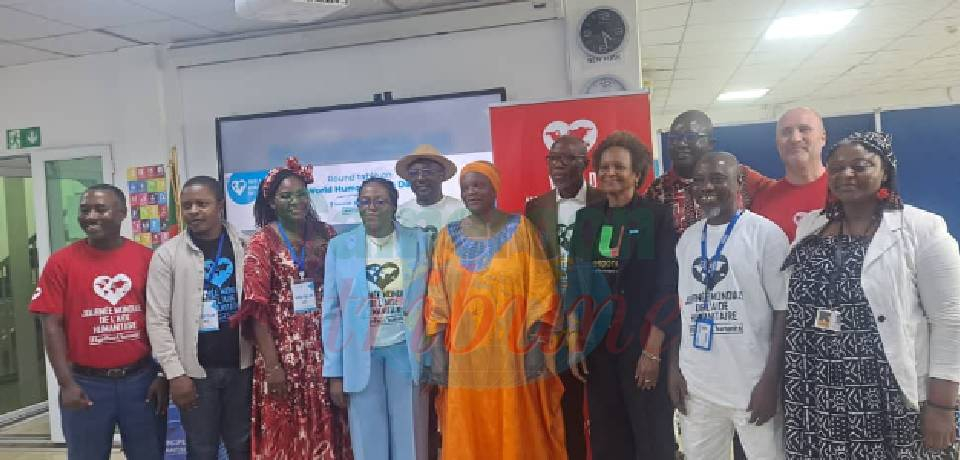
Stakeholders at a roundtable in Yaounde on August 19, 2026 to mark the event discussed Cameroon’s shift towards localized Area-Based Coordination of humanitarian activities.
In a packed auditorium in the United Nations Children’s Fund, UNICEF’s country headquarters in Yaounde on August 19, 2026, humanitarian leaders, top government representatives, and civil society delegates gathered to mark World Humanitarian Day on the global theme "Act for Humanity" (#ActForHumanity). Beyond the formal commemorations, however, the roundtable served as a high-stakes, candid audit of Cameroon’s shifting emergency landscape. A reality defined by a sweeping structural transition, historic funding shortfalls, persistent insecurity, and bad roads during rainy season.
World Humanitarian Day
Opening the roundtable, the United Nations Resident and Humanitarian Coordinator in Cameroon, Dr. Issa Sanogo, set a somber tone. He reminded attendees of the origins of World Humanitarian Day - established following the tragic 2003 bombing of the UN headquarters in Baghdad, Iraq. Before contextualizing the global campaign against the rise in violence against aid personnel.
350 Humanitarian Workers Killed
Quoting data from the UN Office for the Coordination of Humanitarian Affairs, OCHA, Dr. Sanogo revealed that 2025 marked a disastrous record globally. With 907 humanitarian workers killed, kidnapped, or injured - 350 of whom lost their lives, predominantly in conflict zones like Gaza and Sudan. “Behind these figures are interrupted lives, grieving families, and communities deprived of essential support,” Dr. Sanogo stated. Stressing that upholding International Humanitarian Law and preserving humanitarian space are strict obligations, not options.
2.9 Million Amidst Financial Drought
The global crisis mirrors a complex and multidimensional reality in Cameroon. Across the Far North (battered by Lake Chad Basin insecurity), the Anglophone North West and South West regions (disrupted by ongoing violence), and the eastern flank (hosting hundreds of thousands of Central African Republic refugees), 2.9 million people require urgent assistance in 2026.
1.9 Million Most Severely Affected
Humanitarian partners have targeted 1.9 million of the most severely affected, setting a financial baseline of $379 million. Yet, eight months into the year, the Humanitarian Response Plan is severely starved, standing at barely 26% funded. Crucial life-saving sectors are lagging dangerously behind. Such as access to food, nutrition, Water, Sanitation, and Hygiene, WASH, have received barely 15% of their required budgets.
Health, Environmental Emergencies
This financial drought coincides with compounding health and environmental emergencies. In the Far North Region, an active cholera outbreak has infected over 1,200 people. Compounded by seasonal flooding that has destroyed sanitation infrastructure and heightened food insecurity.
Localization As New Paradigm
In response to shrinking international aid budgets, Cameroon was designated as one of eight global pilot countries under the UN’s "Global Humanitarian Reset," embarking on an accelerated humanitarian transition. This transition represents a fundamental paradigm shift. Moving away from internationally-driven emergency interventions toward a localized model. Whereby national NGOs, local civil society, and State technical services take full ownership of leadership and operational coordination.
"Transition simply means localization," asserted Damien Noma, National Coordinator, CHOI (Cameroon Humanitarian and Development Initiatives Secretariat) during the panel discussions. "It is about giving more space, more technical means, and direct resources to local actors who are on the front lines, reaching isolated populations where others cannot."
Visible Structural Milestones
Participants at the roundtable noted structural changes in the manner and management of humanitarian activities in Cameroon were now noticeable in a number of domains.
Area-Based Coordination:
In the North West and South West Regions, traditional top-down structures are being replaced by Area-Based Coordination, ABC platforms. Co-managed by the UN Office for the Coordination of Humanitarian Affairs, OCHA alongside NGOs like Plan International and Green Partner Association, these regional and divisional platforms bring together up to 50 local organizations. To respond dynamically to crisis alerts, such as recent flood relief in Limbe and Buea.
Health Sector De-Clustering:
Mrs. Ndzie Ntsama, Director of Civil Protection in the Ministry of Territorial Administration, MINAT, along with representatives from the Ministry of Public Health, MINSANTE, outlined the progressive transfer of sector coordination from the World Health Organization, WHO to the government. Full "de-clustering" of the health sector is scheduled for completion by 2027.
Cet article complet est réservé aux abonnés
Déjà abonné ? Identifiez-vous >
Accédez en illimité à Cameroon Tribune Digital à partir de 26250 FCFA
Je M'abonne1 minute suffit pour vous abonner à Cameroon Tribune Digital !

- Votre numéro spécial cameroon-tribune en version numérique
- Des encarts
- Des appels d'offres exclusives
- D'avant-première (accès 24h avant la publication)
- Des éditions consultables sur tous supports (smartphone, tablettes, PC)


Reactions
De la meme catégorie

Affaire Martinez Zogo: Le 36e témoin entre en scène
- 27 Oct 2026 10:04
- 0 likes
Cameroon Medical Council: Newly Elected Pledges to Restore Dignity
- 27 Oct 2026 10:03
- 0 likes
En kiosque





Commentaires