

Sustainable Forest Management: COMIFAC 2027–2035 Strategy Focuses On Equity, Sovereignty
- Par Kimeng Hilton
- 17 Sep 2026 14:28
- 0 Likes
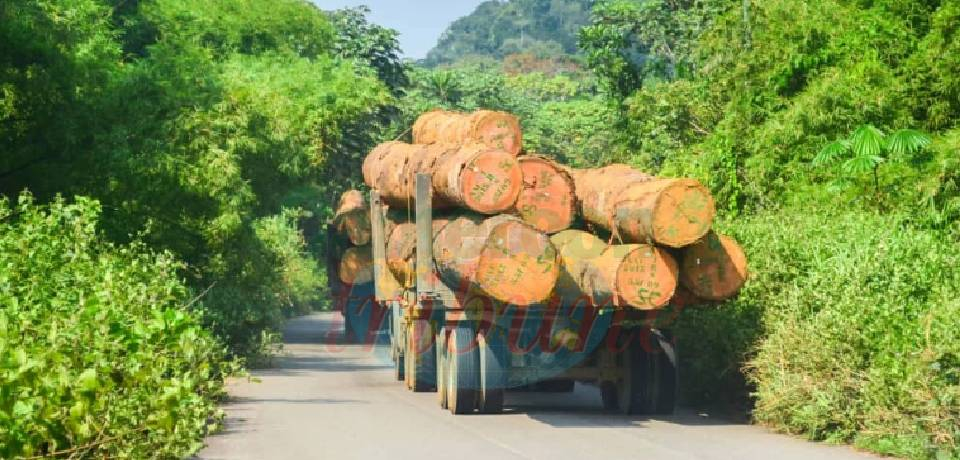
The Central African Forests Commission’s new strategic framework defines key priorities for safeguarding the Congo Basin rainforest.
The Central African Forests Commission, COMIFAC meets in the Cameroonian capital, Yaounde this September 17, 2026 for the operational rollout of its new strategic framework, the 2027–2035 Convergence Plan. Succeeding the 2015–2025 cycle, this regional blueprint defines key priorities to safeguard the Congo Basin rainforest - now recognized as the world's primary net carbon sink - while supporting sustainable socio-economic development across its 10 member states.
Pillars For Next Decade
The 2027–2035 Convergence Plan centres on key operational pillars designed to harmonize regulatory gaps and boost local value addition from natural resources. These are standardizing environmental legislation and aligning forestry tax regimes to curb illegal timber trade, suppress wildlife trafficking, and eliminate cross-border tax competition. Restricting raw log exports to accelerate second- and third-stage domestic timber processing. While expanding value chains for Non-Timber Forest Products, NTFPs.
Shared Ecological Complexes
Strengthening shared ecological complexes - such as the Sangha Tri-National, TNS and TRIDOM landscape - supported by the implementation of the Sub-Regional Anti-Poaching Action Plan, PAPECALF. Protecting critical carbon sinks, particularly the peatlands of the Cuvette Centrale. While leveraging fair carbon pricing and international climate finance through REDD+ mechanisms.
Enforcing Access and Benefit-Sharing, ABS under the Nagoya Protocol, upholding Free, Prior, and Informed Consent, FPIC for indigenous peoples and local communities. And advancing gender equality in the green economy.
Regional Impact, Structural Constraints
An evaluation of COMIFAC’s trajectory demonstrates strong diplomatic cohesion and policy coordination, alongside persistent operational challenges across member states.
Regular Reporting
In terms of governance and scientific baseline data, the regular publication of the “State of the Forests” report by the Observatory for Central African Forests, OFAC has established a globally recognized benchmark for tracking land use, carbon stocks, and deforestation metrics. However, this technical success remains constrained by a persistent structural dependency on external international donors to fund core institutional operations.
Unified Negotiation Bloc
In the arena of climate diplomacy, COMIFAC has successfully presented a unified negotiation bloc during international climate conferences, COPs. And mobilized international support through the Congo Basin Forest Partnership, CBFP. Despite these diplomatic strides, implementation at the national level frequently faces competing priorities. As member states weigh conservation targets against lucrative extractive projects in mining, petroleum, and industrial agro-expansion.
Regional Biodiversity Preservation
On the conservation front, COMIFAC’s legal structuring of transboundary protected areas and joint wildlife law enforcement frameworks has significantly strengthened regional biodiversity preservation. Nevertheless, a noticeable operational gap persists between high-level sub-regional directives and the practical capacities, equipment, and staffing levels of wildlife rangers working on the ground.
Autonomous Funding
Looking ahead to the 2027–2035 implementation window, COMIFAC aims to strengthen autonomous funding mechanisms. And ensure international climate financing directly reaches the states and local communities preserving these vital ecosystems.
Intelligence Arm
The Observatory for Central African Forests, OFAC serves as the technical and scientific intelligence arm of the Central African Forests Commission, COMIFAC. Created in 2007 under the umbrella of COMIFAC and supported by the Congo Basin Forest Partnership, CBFP, OFAC acts as a centralized regional platform for monitoring, data collection, and knowledge management across the 10 member states.
Core FunctionsOFAC functions through a multi-tiered data aggregation network that connects field-level management with regional decision-makers:
Data Collection, Regional Monitoring
OFAC relies on National Coordination Units embed...
Cet article complet est réservé aux abonnés
Déjà abonné ? Identifiez-vous >
Accédez en illimité à Cameroon Tribune Digital à partir de 26250 FCFA
Je M'abonne1 minute suffit pour vous abonner à Cameroon Tribune Digital !

- Votre numéro spécial cameroon-tribune en version numérique
- Des encarts
- Des appels d'offres exclusives
- D'avant-première (accès 24h avant la publication)
- Des éditions consultables sur tous supports (smartphone, tablettes, PC)









Commentaires