

« We Must Specifically Dedicate These Spaces To Youths And Women”
- Par Jocelyne NDOUYOU
- 30 Dec 2025 11:13
- 0 Likes
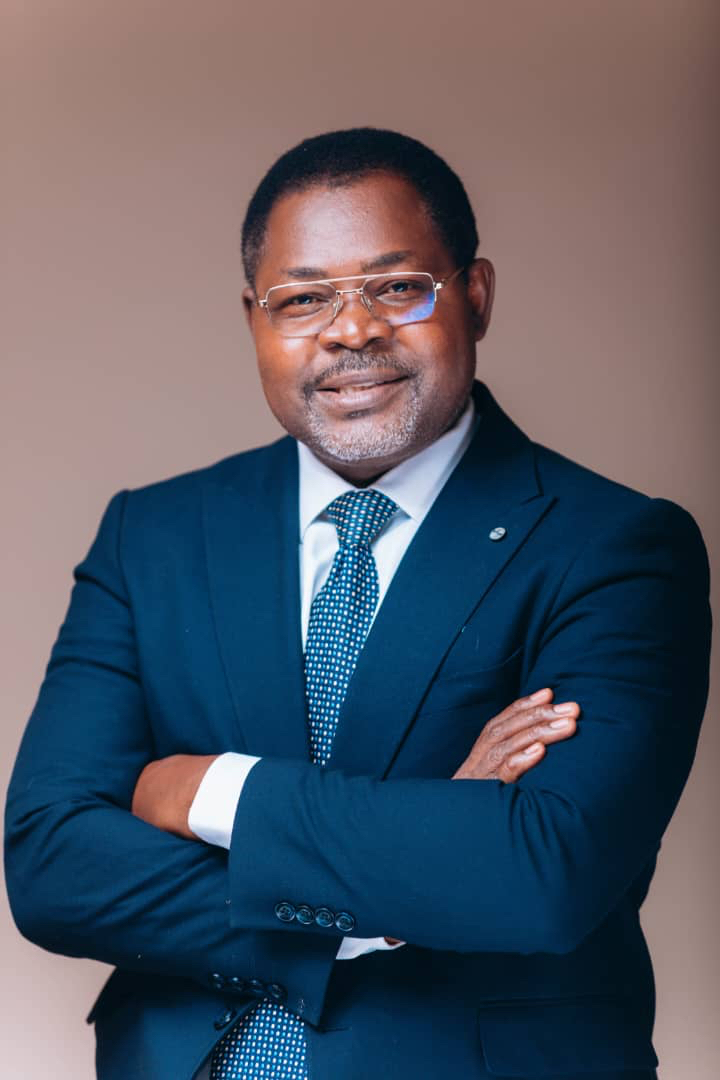
Dr. Kennedy Tumenta, economist, CEO and Founder of the African Business Information Bank.
What is your view on Cameroon's overall economic health as 2025 draws to a close?
Cameroon’s economic health at the close of 2025 is defined by a resilient non-oil sector, but we must recognize that "resilience" is no longer enough—we must pivot toward aggressive growth. While we are projecting a real GDP growth rate of 3.9% to 4.0%, largely sustained by a 4.2% expansion in services, we are still facing headwinds from declining oil production and a high risk of debt distress. The urgency of the moment requires us to look beyond these numbers; we must realize that sustaining a positive trajectory depends entirely on our ability to transform this non-oil growth into a national movement. We must maintain our debt below the 70% CEMAC ceiling while solving the liquidity issues that hamper our sovereignty. The time for passive observation is over; we must now rally every resource to ensure 2026 becomes the year of the great economic leap.
One of the highlights will have been the full commissioning of the Nachtigal Hydroelectric Dam. What can be expected in concrete terms in a context of continuing unmet demand, transport difficulties, and the renationalization of the distribution operator ENEO?
The commissioning of the Nachtigal Hydroelectric Dam (420 MW) is a game-changer, but its success is a test of our national will. In concrete terms, it will cover nearly 30% of our national consumption, yet this power must not be "stranded." In the wake of ENEO’s renationalization, we must act with patriotic urgency to fix the distribution grid. We expect a marked reduction in load shedding, but this will only translate into industrial productivity if we treat our transmission infrastructure as a national priority. We must ensure that this energy fuels our National Champions—our local industries—without the "last mile" failures that have historically stifled our artisans and entrepreneurs. 2026 must be the year we bridge the gap between generation and the final user through massive, immediate investment in grid modernization.
In 2025, there was also the negative impact of post-election unrest, notably the slowdown in economic activity. What are the consequences for Cameroon's emergence project?
The post-election unrest was a direct threat to the 2035 Emergence Project, proving that political stability is the bedrock of economic prosperity. These disruptions didn't just slow down trade; they eroded the purchasing power of our most vulnerable citizens and signaled a high-risk environment to the global stage. For Cameroon to emerge, we must move past these "ghost town" mentalities and replace them with a collective commitment to productivity. Recurrent instability distracts our government from building infrastructure and forces it into conflict management. To catch up in 2026, we must understand that every day of unrest is a day we hand our competitive advantage to our neighbors. Stability is not just a political goal; it is a prerequisite for the private sector-led transformation we so desperately need.
The year 2026 marks the beginning of the President of the Republic's new seven-year term and the start of the last decade leading up to 2035. What needs to be emphasized in order to make up for growth delays that are hampering the emergence project?
As we enter this final decade, we must adopt a "National Champion" mindset. To make up for lost time, we must rally all Cameroonians—including our powerful Diaspora—to work with a renewed sense of urgency. We must create competitive spaces within our decentralized territorial administrations, establishing Rural Competitive Zones that bring the industrial revolution to the village level. We must identify and support National Champions at every level, from the small-scale innovator to the industrial titan, ensuring they have the "Made in Cameroon" backing to dominate regional markets. This is the moment to densify our manufacturing, move away from raw material exports...
Cet article complet est réservé aux abonnés
Déjà abonné ? Identifiez-vous >
Accédez en illimité à Cameroon Tribune Digital à partir de 26250 FCFA
Je M'abonne1 minute suffit pour vous abonner à Cameroon Tribune Digital !

- Votre numéro spécial cameroon-tribune en version numérique
- Des encarts
- Des appels d'offres exclusives
- D'avant-première (accès 24h avant la publication)
- Des éditions consultables sur tous supports (smartphone, tablettes, PC)






Commentaires